
Статия: Is 9ct Gold Durable for Everyday Jewellery?
Is 9ct Gold Durable for Everyday Jewellery?
A ring should feel at home on the hand that wears it - catching the light across a coffee cup, a steering wheel, or a champagne glass without asking to be saved for special occasions. So, is 9ct gold durable enough for this kind of everyday life? For many beautifully made pieces, the answer is yes. Its enduring appeal lies in a considered balance of precious gold content, strength and attainable luxury.
9ct gold is a particularly intelligent choice for jewellery intended to be worn often. It has a character all of its own: warm and precious, yet practical enough for a modern jewellery wardrobe. The detail that matters is not simply the carat stamp, but the design, construction and care behind the finished piece.
Is 9ct gold durable for daily wear?
In the UK, 9ct gold contains 37.5% pure gold. The remaining 62.5% is made up of other metals, known as alloy metals, which give the jewellery its colour, structure and wearability. Depending on the desired finish, these may include silver, copper, zinc, palladium or other carefully selected metals.
Pure gold is naturally soft. By combining it with stronger alloy metals, 9ct gold generally becomes more resistant to everyday knocks and surface scratching than higher-carat yellow gold. That makes it an excellent material for rings, bracelets, pendants and earrings that are designed to become part of your signature look.
Durability does not mean invulnerability. Any precious metal can mark, bend or wear over time, particularly when it is formed into a very fine chain, a slim ring shank or delicate claws around a gemstone. Think of 9ct gold as resilient rather than indestructible: it is made for real life, but it will reward thoughtful wear.
Why the alloy makes a difference
The lower proportion of pure gold in 9ct jewellery is often misunderstood as a compromise. In practical terms, it can be a distinct advantage. The alloy content helps create a metal that is well suited to frequent wear, while retaining the unmistakable richness and permanence of gold.
Its exact performance can vary. Yellow 9ct gold is valued for its classic, softly golden tone. Rose 9ct gold takes on its romantic blush from a higher copper content, while white 9ct gold uses paler alloy metals to create a crisp, contemporary appearance. Each alloy has its own character, and two pieces carrying the same 9ct hallmark may not feel identical in colour or surface finish.
White gold is sometimes enhanced with rhodium plating for added brightness. This finish can gradually wear away in areas of high contact, such as the underside of a ring, and may need refreshing over the years. This is normal maintenance, not a sign that the gold beneath has failed.
9ct gold versus higher-carat gold
When choosing between 9ct and 18ct gold, the most useful question is not which is universally better. It is which best suits the piece, the wearer and the life it will lead.
18ct gold contains 75% pure gold, giving it a deeper, more saturated yellow tone and a notably luxurious weight and feel. It is a wonderful choice for heirloom designs, significant diamond rings and jewellery selected for its high gold content. Yet because pure gold is softer, 18ct can be more susceptible to everyday surface marks than 9ct, depending on the alloy and construction.
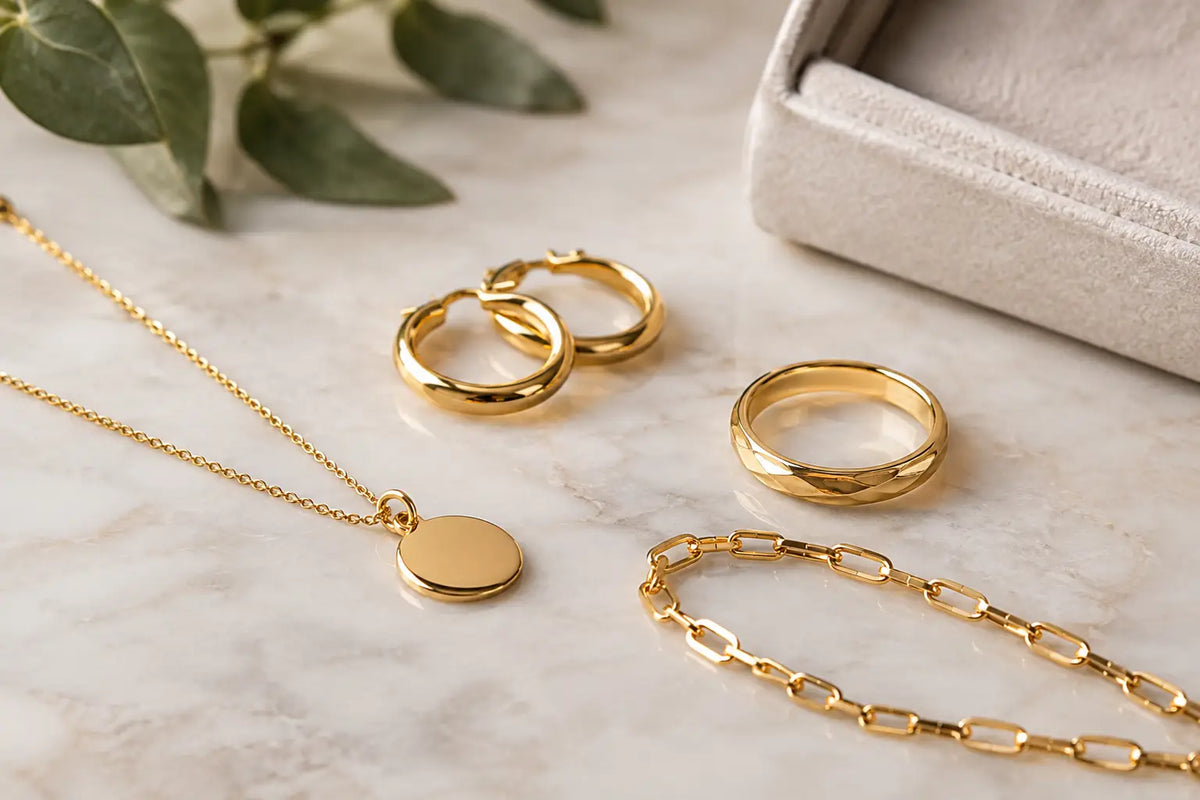
9ct gold brings a little more everyday practicality. It is often an assured choice for layering chains, hoop earrings, stackable rings and meaningful gifts intended for regular wear. A well-designed 9ct gold piece is still fine jewellery, hallmarked and crafted to be enjoyed for years. It simply expresses luxury through versatility as much as through gold purity.
Platinum is denser and wears differently again, while sterling silver offers a bright, expressive alternative that needs its own care routine. There is no single right metal for every collection. Mixing metals and choosing each piece for its purpose can create a wardrobe that feels considered and personal.
Design matters as much as the metal
A substantial 9ct gold signet ring will cope with daily wear very differently from an ultra-fine trace chain. Both may be beautifully crafted, but their proportions determine where they are best worn and how they should be cared for.
For rings, look beyond the carat to the width and depth of the band. A very slender band is elegant and refined, though it is naturally more vulnerable to bending if it catches or is subjected to repeated pressure. A slightly heavier profile provides more metal through the shank, making it a confident choice for a ring worn every day.
Gemstone settings deserve the same attention. Bezel settings, where a rim of metal surrounds the stone, offer excellent protection for an active lifestyle. Claw settings allow more light into a diamond or gemstone and create a timeless, elevated silhouette, but the claws should be checked periodically to ensure they remain secure. This is especially worthwhile for engagement rings and treasured pieces worn without pause.
Chains should be chosen with proportion in mind. Fine chains are graceful for pendants and delicate layering, but they should be removed before sleep, exercise or any activity where they could snag. More substantial links are naturally better suited to constant wear. A thoughtfully chosen chain length also reduces friction from collars, zips and other jewellery.
What can affect the appearance of 9ct gold?
Over time, 9ct gold may develop a soft patina: tiny surface marks that reflect a life well lived. Some people love this gentle change, while others prefer the fresh polish of a newly finished piece. A professional clean and polish can restore brilliance, although polishing should be carried out with care and only when needed, as it removes a minute layer of metal.
Because 9ct gold contains more alloy metals than 18ct gold, it can be slightly more prone to tarnishing in certain conditions. This may appear as a subtle dullness rather than damage. Exposure to moisture, perfume, lotions, cleaning products and chlorinated water can all affect the surface. Individual skin chemistry can also play a part.
This is easily managed with mindful care. Put jewellery on after applying fragrance, skincare and hairspray. Remove it before swimming, showering, gardening, gym sessions and household cleaning. Store each piece separately in a soft-lined box or pouch so that chains do not tangle and polished surfaces do not rub against one another.
For home cleaning, use lukewarm water, a small amount of mild washing-up liquid and a very soft brush, then rinse and dry with a lint-free cloth. Avoid abrasive pastes, harsh chemical dips and ultrasonic cleaners unless a jeweller has confirmed they are suitable for your specific piece, particularly if it features gemstones, pearls or delicate settings.
A hallmark of confidence
A UK hallmark is one of the clearest assurances when buying gold jewellery. On a 9ct gold piece, the fineness mark 375 confirms that it contains 37.5% pure gold. Hallmarking offers valuable clarity about the precious metal you are choosing, whether you are selecting a first gold necklace, a wedding band or a future heirloom.
It is also worth remembering that longevity is created through craftsmanship as well as metal content. Secure fastenings, balanced proportions, carefully finished edges and well-made settings all contribute to how a piece performs over time. At Harper Kendall, that attention to form and finish is central to jewellery designed to feel as individual as the person wearing it.
Is 9ct gold right for your lifestyle?
If you want precious jewellery with the strength to accompany your everyday style, 9ct gold is an excellent consideration. It works beautifully for the person who never removes their favourite hoops, for a pendant worn close to the heart, or for a stack of rings that evolves with each new milestone.
Choose a design with enough substance for how you plan to wear it, care for it as you would any treasured possession, and allow it to collect the quiet signs of your story. The most beautiful jewellery is not merely durable enough to last - it is made to be lived in.