What Ring Suits My Hand Best?
The quickest way to answer what ring suits my hand is to stop looking at trends in isolation and start looking at proportion. A ring can be exquisite on its own and still feel slightly off once it is on the hand. The most flattering choices work with your finger length, width, knuckle shape and overall hand proportions, while still feeling unmistakably like you.
A beautifully chosen ring does more than decorate the hand. It sharpens your personal style, balances proportions and gives everyday gestures a little more presence. That is why the right ring is rarely about one fixed rule. It is about shape, scale and finish coming together with confidence.
What ring suits my hand? Start with proportion
If your fingers are shorter, elongated silhouettes usually create the most lengthening effect. Oval, pear and marquise stones naturally draw the eye vertically, especially when set on a finer band. This does not mean you must avoid round or square cuts, only that broader settings can make shorter fingers appear more compact.
If your fingers are long and slender, you have more freedom with scale. Wider bands, larger centre stones and more architectural designs tend to sit beautifully because the hand can carry stronger visual weight. Princess, cushion and round cuts often look especially balanced here, as they add presence without overwhelming the finger.
For wider fingers, proportion matters more than size alone. Rings that are too delicate can sometimes disappear, while a band with a little more substance feels intentional and elegant. Oval and emerald cuts are often flattering because they introduce length, and settings with a defined shoulder or halo can create a more balanced silhouette.
If your knuckles are more prominent, look for rings that feel harmonious from every angle. A slightly broader band can help the ring feel in proportion once it is past the knuckle, and settings with a low, elegant profile often look refined and comfortable for daily wear.
Ring shapes that flatter different hands
Stone shape changes the entire mood of a ring. It also changes how the hand is perceived.
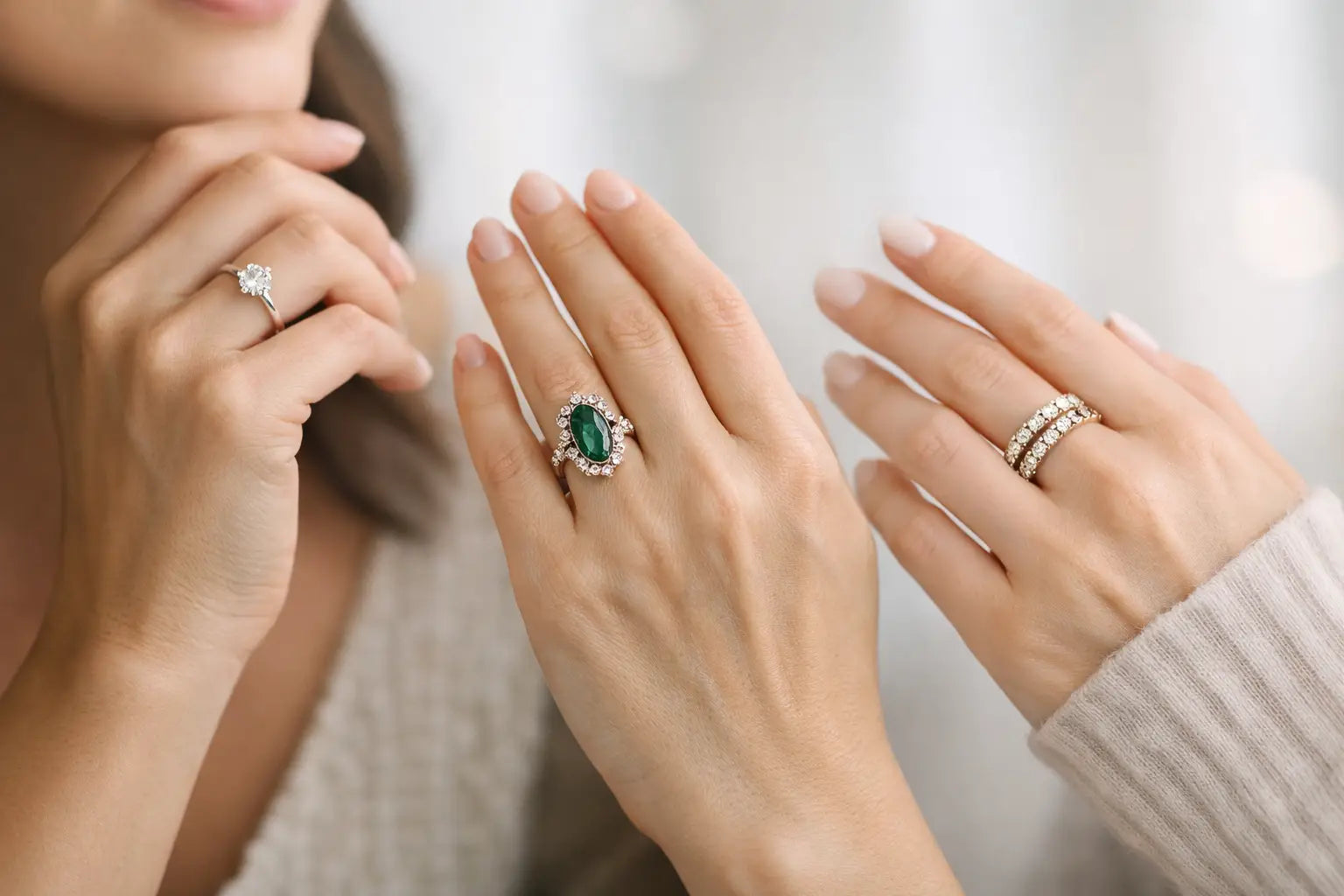
Oval cuts are one of the most universally flattering choices. Their soft length can make fingers appear more slender, and they suit both modern and classic styling. Pear shapes offer a similar effect, with a little more drama. Worn with the point facing outward, they can create a graceful, elongating line.
Marquise cuts are more directional and fashion-led. They suit those who enjoy statement design and want to lengthen the look of the finger. Because the shape has strong movement, it works especially well when the rest of the ring is kept elegant rather than overworked.
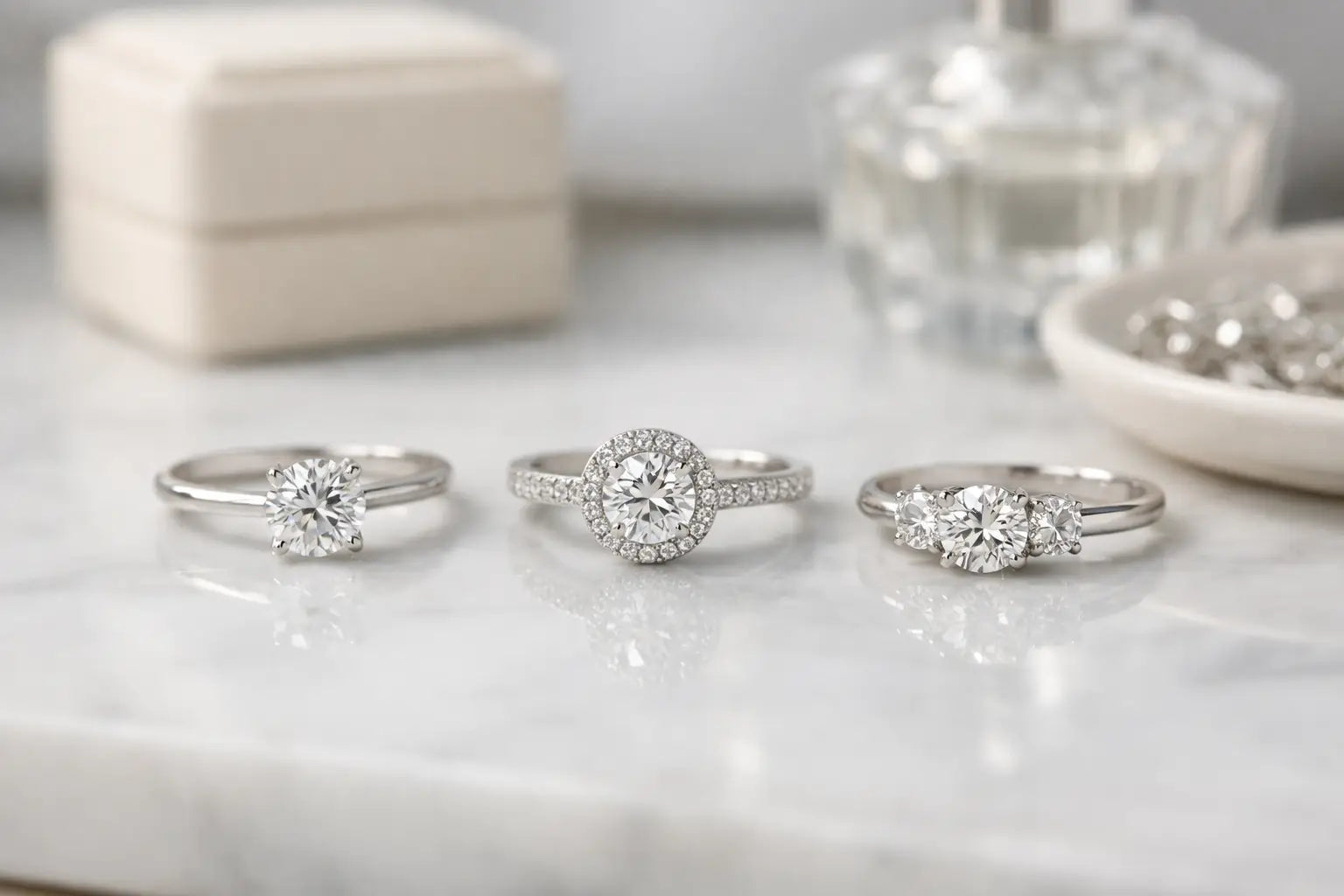
Round brilliant cuts are timeless and balanced. They suit many hand shapes because they do not push the eye in one direction too strongly. If your fingers are petite, choosing a finer band keeps the look light. If your hands are larger, a wider setting or diamond-set shoulders can give the ring more presence.
Princess and cushion cuts bring structure. Their squarer outline can look striking on longer fingers, where there is room for the shape to breathe. On shorter fingers, they can still work beautifully, but a slimmer band and a slightly raised setting often helps the design feel less compact.
Emerald cuts have a refined, elongated geometry that feels quietly luxurious. They tend to flatter wider or shorter fingers because of their length, but they also look exceptional on long hands where their clean lines can really stand out.
Band width matters more than most people expect
Band width is often overlooked, yet it has a dramatic effect on how a ring sits on the hand. Fine bands can make a centre stone appear larger and create an airy, delicate look. They are especially flattering on petite hands or shorter fingers because they do not interrupt the line of the hand.
Wider bands feel grounded, polished and often more contemporary. They suit longer fingers particularly well, and they can also balance broader hands. The trade-off is that very wide bands can shorten the look of the finger if the hand is petite. In those cases, a medium-width band often gives the best of both worlds - enough presence, without heaviness.
Texture also plays a part. High polish reflects light and feels crisp. Satin or brushed finishes can appear softer and more understated. Diamond-set bands add brilliance, but they also add visual width, which is worth considering if you are trying to keep the look slender.
Settings and details that change the look
The setting influences not only the style of a ring, but how flattering it feels on the hand. Solitaire settings are enduring for good reason. They keep the focus on shape and proportion, making them a strong choice if you want a ring that feels elegant without excess.
Halo settings can add drama and amplify presence. On smaller hands, a very large halo may dominate, while a delicate halo can create beautiful light without losing refinement. On larger hands, a halo can be the detail that makes the ring feel properly scaled.
Three-stone rings offer balance and symbolism, but they also increase visual width. If your fingers are slim and long, this often looks effortlessly chic. If your fingers are shorter, choosing tapered side stones rather than broad ones can keep the silhouette more flattering.
East-west settings, where an elongated stone is set horizontally, feel contemporary and design-led. They can be incredibly stylish, though they do visually widen the finger. If you love the look but want a softer effect, an east-west oval tends to feel gentler than a marquise or emerald cut in the same orientation.
Match the ring to your hand and your style
A flattering ring should not feel like a compromise between what suits you and what you love. The strongest choices do both. If your wardrobe is tailored and minimal, clean silhouettes such as emerald cuts, polished gold bands or low-profile solitaires will often feel most aligned. If your style leans romantic, softer shapes, pavé detailing and warmer tones can bring that mood to the hand.
Metal colour matters too. Yellow gold gives warmth and richness, particularly on warmer skin tones or those who enjoy a more classic jewellery wardrobe. White gold, platinum and sterling silver feel crisp and luminous, often suiting cooler tones and a more modern aesthetic. Rose gold can soften the look of a ring and feels especially flattering if you prefer a feminine, contemporary finish.
This is where individuality becomes more important than rules. Two people can have near-identical hand shapes and choose entirely different rings, with both looking exceptional. One may suit a pared-back oval solitaire, the other a diamond-set statement band. The difference is not only hand shape. It is personality.
How to tell if a ring really suits your hand
When trying on rings, pay attention to the overall picture rather than only the stone. Look at your hand at rest. Move it as you naturally would. If the ring feels as though it belongs there, the proportions are likely right.
It helps to notice what the ring is doing visually. Does it lengthen the finger, balance the knuckle, or add elegant presence to the hand? Or does it feel too small, too heavy, too busy or slightly out of sync with your proportions? Those reactions are usually immediate, and they are useful.
Comfort should not be treated as secondary. A ring can be visually perfect and still not become a favourite if the setting catches, the band feels bulky or the fit is wrong. Fine jewellery is at its best when beauty and wearability meet.
For occasion pieces, you may choose more drama than you would for everyday wear. That is entirely valid. A dress ring for evening styling can be bolder, taller or more directional. A ring you plan to wear daily should feel effortless enough to become part of your life, not just part of an outfit.
If you are still asking what ring suits my hand
If you are deciding between styles, begin with shape first, then band width, then setting. That order makes the process much clearer. Shape changes the line of the finger, width affects visual balance, and the setting refines the personality of the piece.
Try contrasting options rather than similar ones. Compare an oval with a round cut, a fine band with a broader one, or a solitaire with a three-stone design. The differences will reveal themselves quickly on the hand. Often, the right ring is not the one you expected on paper but the one that brings the hand into harmony the moment you put it on.
The most beautiful ring is the one that looks considered, feels effortless and reflects your own sense of style with quiet certainty. If a design gives your hand elegance, proportion and presence, you have your answer.