
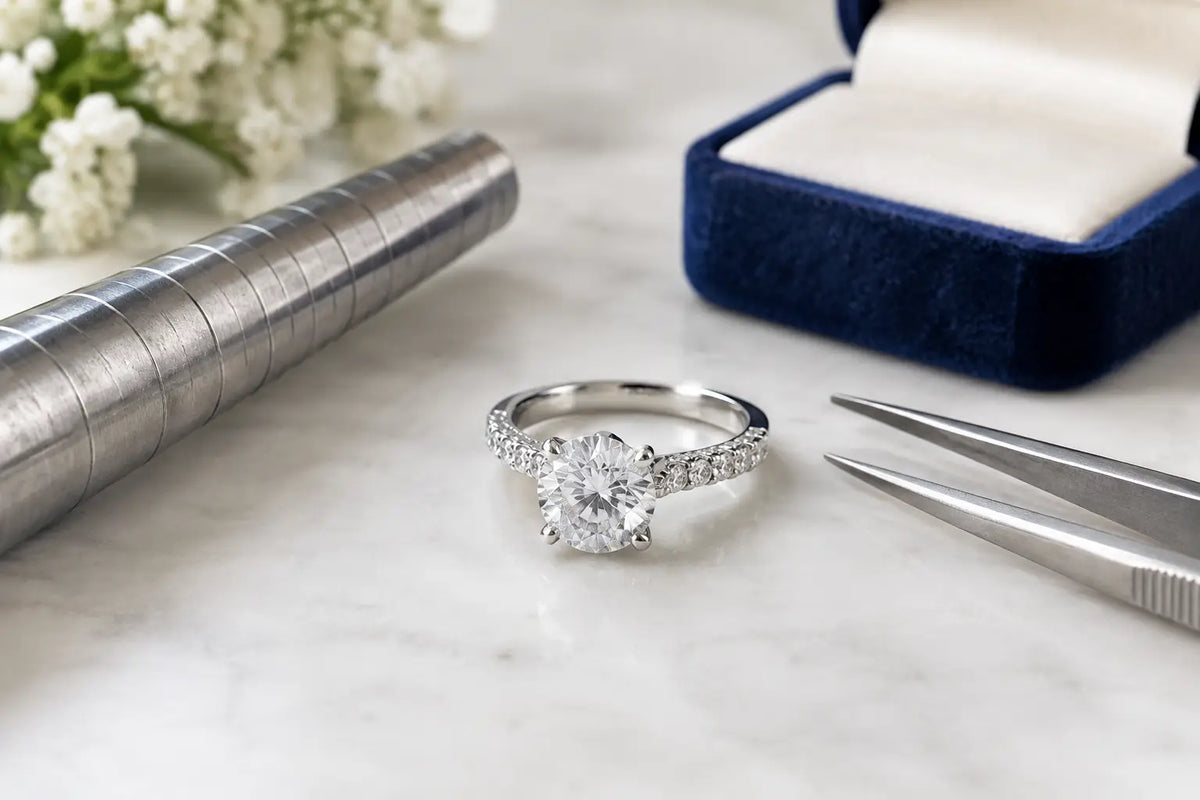
Can Diamond Rings Be Resized? What to Know
A diamond ring should feel like it belongs to you - secure enough to wear with confidence, yet comfortable enough to forget it is there. Whether an engagement ring has become loose, a treasured gift needs adjustment, or your hands have simply changed over time, the question is a practical one: can diamond rings be resized? In many cases, yes. The right answer, however, depends on the design, the metal and the way its diamonds are set.
Resizing is skilled jewellery work, not a simple alteration. A considered assessment protects the proportion, strength and distinctive character of the ring, so it continues to look every bit as beautifully crafted as the day it was chosen.
Can diamond rings be resized safely?
Most diamond rings can be resized by an experienced jeweller, particularly classic designs with a plain section of metal at the back of the band. Solitaire engagement rings, many three-stone rings and diamond-set rings with a clear sizing area can often be made smaller or larger without affecting the central setting.
Making a ring smaller usually involves removing a small section from the lower part of the shank, carefully joining the metal and refinishing it to restore an even, polished appearance. To make a ring larger, a jeweller may either gently expand the band by a very small amount or add a precisely matched piece of metal. The latter is generally the more refined option for a substantial adjustment, as it preserves the ring’s shape and structural integrity.
The diamond itself is not altered during this process. Yet every intervention around a stone-set design calls for care. Heat, pressure and finishing work must be controlled by a professional who understands both the precious metal and the setting style.
What determines whether a diamond ring can be resized?
The simple answer is that no two rings behave in quite the same way. An expert will look beyond the current finger size to assess the construction of the entire piece.
The ring’s setting
A solitaire ring with diamonds concentrated at the top is often the most straightforward to resize. There is usually sufficient plain metal at the base of the shank, well away from the setting, for a discreet adjustment.
Rings with diamonds extending partway around the band may still be suitable, although the available sizing range can be more limited. With an eternity ring, where diamonds continue all the way around, resizing is considerably more complex. Cutting into the band can interrupt the stone pattern, alter the spacing between settings and make it difficult to retain the intended symmetry. A very slight adjustment may occasionally be possible, but it should never be assumed.
Channel-set, pavé and delicate claw-set diamonds require particular attention. The setting should be inspected before and after any work to ensure every stone remains properly secure. For designs defined by fine detail, an invisible result matters as much as a technically successful one.
The metal
Yellow gold, white gold and platinum are frequently resized, though each requires its own approach. Gold is generally responsive to expert sizing work. White gold may need replating after resizing to renew its bright, cool-toned finish. Platinum is wonderfully durable, but its density and working properties mean it should be handled by a jeweller experienced in platinum repair and fabrication.
Sterling silver rings can also sometimes be resized, but their design and condition are especially relevant. A very fine, highly detailed or heavily worn band may not be an ideal candidate. In every metal, the aim is the same: a finish that feels considered, balanced and true to the original design.
The amount of adjustment needed
A change of one or two sizes is often more achievable than a dramatic increase or reduction. Large adjustments can affect the circle of the shank, disturb the proportions of the shoulders or place additional tension on stone settings.
If a ring needs to move several sizes, a jeweller may recommend remaking the shank, redesigning the setting or commissioning a new version in the correct size. This is not a lesser outcome. For a meaningful diamond piece, it can be the best way to preserve its beauty while creating a fit designed for years of wear.
The condition and age of the ring
Before resizing a pre-loved or heirloom ring, the jeweller should inspect the claws, settings and band for wear. Over time, metal can become thinner, and claws may need tightening or rebuilding before the ring is returned to regular wear.
Antique and vintage designs deserve an especially sensitive approach. Their charm often lies in details that cannot be readily replicated. Sometimes a small sizing bead or a removable ring adjuster is the wiser choice, particularly where preserving original craftsmanship takes priority over altering the band.
Signs your diamond ring needs resizing
A ring that turns freely and slides over the knuckle with slight resistance is usually sitting well. It should not feel restrictive, leave a deep impression after short wear, or become difficult to remove when your hands are warm.
If the ring spins repeatedly, slips off when washing your hands or allows the diamond to sit off-centre, it is likely too large. A loose ring is more than an inconvenience. It can be exposed to knocks, and frequent movement may cause unnecessary wear against other rings.
A band that feels tight can be equally problematic. Fingers naturally fluctuate in size with temperature, exercise, travel, pregnancy, medication and the time of day. Rather than judging fit after a long walk or on a particularly warm afternoon, assess it over several days. A truly comfortable size should accommodate everyday changes without becoming insecure.
Alternatives when resizing is not advisable
Not every ring needs to be cut and reshaped. If the adjustment is small, sizing beads can be added discreetly to the inside of the band. These small polished additions help prevent a ring from rotating, making them particularly useful when a wearer has larger knuckles but slimmer fingers.
A fitted ring guard may offer a temporary answer for a band that is slightly too loose. This can be helpful while waiting for a permanent resizing decision, or during periods when finger size is likely to change. It is less elegant than a professional alteration, but it avoids committing to a change prematurely.
For diamond eternity rings or highly intricate settings, a bespoke remake can be the most satisfying option. It offers the opportunity to retain the original design language while refining proportions, metal choice and fit for the person who will wear it. A cherished diamond can often become the centrepiece of a newly crafted setting, carrying its story forward in a form that feels entirely personal.
Choosing the right time to resize
For an engagement ring, it is tempting to arrange resizing immediately after the proposal. It is usually better to let the ring be worn briefly first, unless the fit is clearly unsafe or uncomfortable. This gives the wearer time to understand how it feels across ordinary routines and changing temperatures.
If the ring is an important surprise, erring slightly larger is often safer than selecting a size that is too small. A professional can reduce a suitable design with relative ease, while a ring that cannot pass over the knuckle takes the pleasure out of the first wear.
It is also worth considering how the diamond ring will sit alongside a wedding band. A refined bridal set should feel cohesive at the hand, with bands that align comfortably and complement one another in height, colour and silhouette. Trying both together before final sizing can avoid a second alteration later.
Caring for a ring after resizing
Once the work is complete, inspect the ring in good light. The shank should look even, the setting should feel secure and the finish should be consistent around the band. A reputable jeweller will check the diamonds and polish the ring as part of the process.
For the first few days, wear it as you normally would but remain attentive to comfort and movement. If it feels unexpectedly tight, spins more than expected or catches on fabric, return to the jeweller for advice rather than trying an at-home solution. Adhesive adjusters and forceful bending can mark precious metal and put pressure on delicate settings.
Regular professional checks remain worthwhile for any diamond ring, resized or not. Diamonds are enduring, but the metal that holds them deserves periodic care. A quick inspection of claws, channels and the shank helps protect both the craftsmanship and the sentiment held within the piece.
A beautifully fitted diamond ring becomes part of your natural gesture - a quiet expression of love, achievement or individual style. If the fit is not right, thoughtful expert care can often restore that effortless feeling, allowing the design to be worn exactly as it was intended: with confidence, comfort and distinction.