

How to Choose Diamond Pendants with Confidence
A diamond pendant sits close to the heart, but its impact is often seen first in the light. The right piece can become part of a daily signature, mark a private milestone or bring quiet brilliance to an evening look. Knowing how to choose diamond pendants begins not with the largest stone, but with the balance of diamond, setting, metal and the person who will wear it.
Unlike a ring, a pendant has movement. It catches the light as you walk, rests against different fabrics and changes character with the length of its chain. This makes proportion and design as significant as diamond quality. A beautifully considered pendant should feel effortless in its setting while still holding its own.
Begin with the role your pendant will play
Consider when and how the pendant will be worn. For everyday use, a refined solitaire, a small diamond disc or a softly sculpted motif offers versatility without asking for special occasions. These designs work elegantly with a crisp shirt, knitwear or an open neckline, adding polish rather than competing with the rest of your wardrobe.
For a gift or milestone, symbolism may lead the choice. A diamond initial, heart, cross, celestial design or birthstone-and-diamond combination gives the piece a more personal narrative. A larger centre stone or diamond halo can feel especially appropriate when the pendant is intended as a lasting occasion piece.
There is no universal ideal size. A delicate pendant may be exactly right for someone who prefers understated jewellery, while a more pronounced design suits a wearer who enjoys a confident focal point. The finest choice reflects individual style rather than a rulebook.
How to choose diamond pendants by diamond quality
The four Cs - cut, colour, clarity and carat weight - provide a useful foundation, but pendants invite a different set of priorities from diamond rings. A stone is viewed at more of a distance and in constant motion, so overall brightness and visual harmony tend to matter more than minute inclusions visible only under magnification.
Put cut and light performance first
Cut is the quality most closely connected to sparkle. A well-cut diamond reflects light with lively brilliance, allowing even a modestly sized stone to appear bright and expressive. Round brilliant diamonds remain a classic choice for this reason, with their exceptional fire and familiar symmetry.
Fancy shapes bring a more distinctive mood. Oval diamonds can create an elongated, elegant line; pear shapes feel graceful and directional; emerald cuts offer clean, architectural flashes of light rather than intense scintillation. Choose the shape for its character as much as its appearance on a specification sheet.
When comparing pendants, look at the diamond in varied light where possible. A considered stone should retain a pleasing liveliness in natural daylight as well as softer interior lighting.
Choose colour and clarity for a beautiful overall look
Colour is especially influenced by the metal surrounding the diamond. A cool white metal can emphasise a bright, icy appearance, while yellow gold may lend a softer warmth that feels intentional and timeless. Neither effect is better - it depends on the aesthetic you want and the jewellery already worn most often.
For clarity, seek a diamond that appears clean to the eye. A pendant does not usually require perfection under a loupe to look exquisite when worn. Selecting a visually clean stone can allow more focus to fall on the cut, proportion or a design detail that makes the piece feel uniquely yours.
Consider carat weight in relation to the setting
Carat weight describes a diamond’s weight, not simply its visible size. Two diamonds of the same weight can face up differently depending on shape and cut, while a halo or finely diamond-set surround can create the impression of greater presence.
A single, open-set diamond will naturally make the centre stone the focus. A bezel setting gives a more contemporary outline and can make a stone feel slightly more substantial, while also offering a smooth, protective edge. If a larger visual effect is desired without making the piece feel overly formal, a halo or cluster design is an elegant solution.
Select a setting that suits your lifestyle
The setting determines how the diamond meets the light and how the pendant lives with you. Prong settings expose more of the stone, encouraging maximum sparkle and a light, classic profile. They are particularly beautiful for solitaire pendants, though the claws should be checked periodically as part of responsible jewellery care.
A bezel setting surrounds the diamond with a fine rim of precious metal. It feels sleek, modern and reassuringly secure, making it a strong choice for frequent wear or a more minimal wardrobe. Flush-set and pavé details offer a subtler, design-led approach, where diamonds become part of the surface rather than the sole focal point.
Also look at the bail, the small fitting that connects pendant to chain. A fixed bail keeps the design centred and often feels more contemporary. A traditional articulated bail allows gentle movement and can add a graceful, classic quality. This detail is small, but it affects how the pendant sits at the neckline.
Match the metal to your collection and complexion
Your pendant should feel at home alongside the pieces you reach for most. Yellow gold offers richness and a heritage feel, beautifully complementing warm-toned diamonds and classic styling. White gold brings a clean, luminous finish that lets the diamond take centre stage. Platinum has a naturally white appearance and a satisfying sense of permanence, while rose gold gives a softer, romantic contrast.
The choice between 9ct and 18ct gold is partly aesthetic and partly practical. Both are precious gold alloys suited to fine jewellery, while 18ct gold has a richer gold content and colour. A 9ct gold pendant can be an excellent choice for regular styling, particularly when durability and a more understated golden tone appeal.
Mixed-metal wardrobes need not limit you. A diamond pendant is often the piece that brings different tones together. If you regularly wear both yellow and white metals, choose the colour that feels most flattering against your skin and most aligned with the pendant’s design.
Get the chain length and proportion right
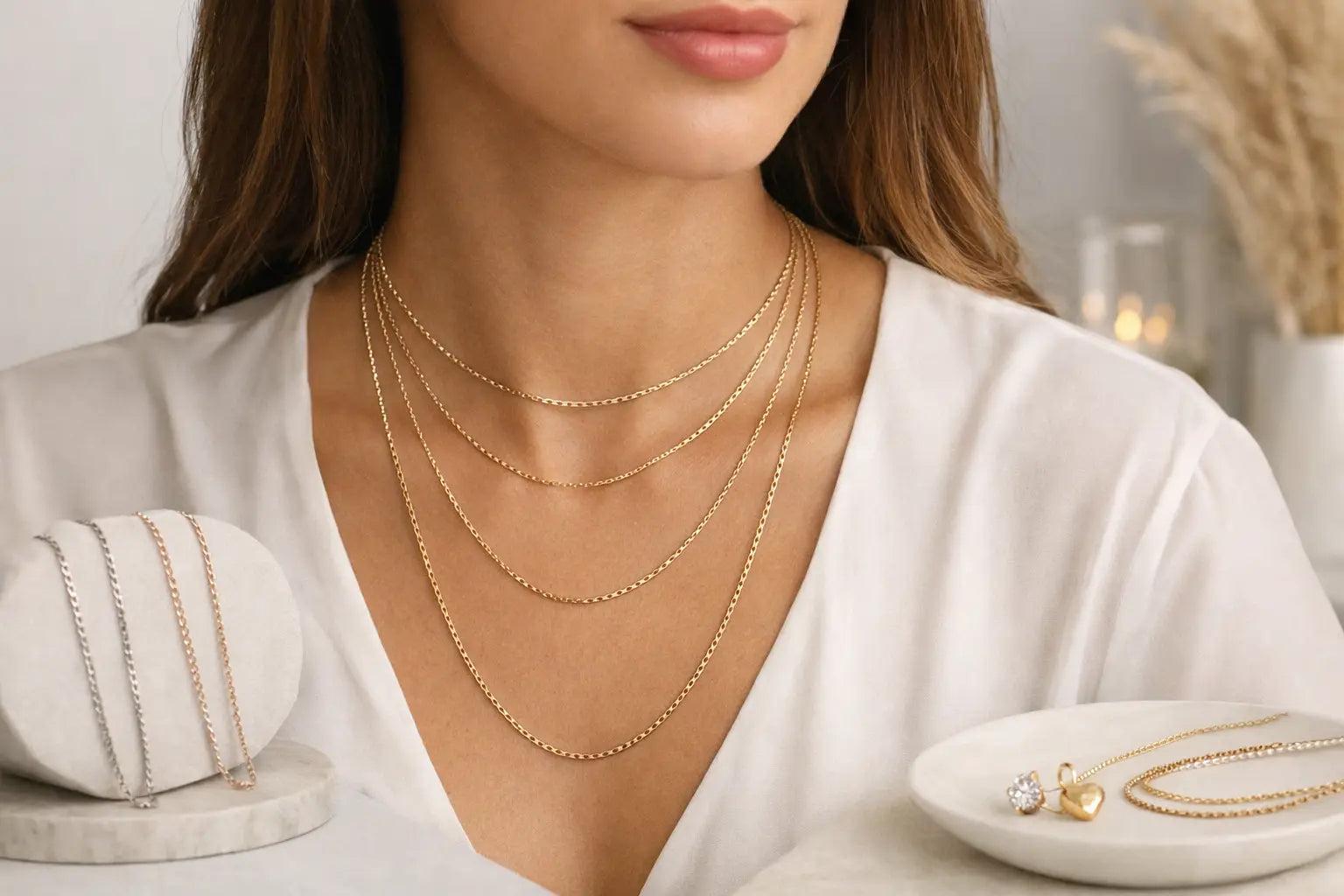
A pendant is only as wearable as its chain. The classic 16 to 18-inch length places a pendant near the collarbone and suits a wide variety of necklines. A shorter chain creates a more contemporary, close-to-the-neck look, while a longer length can feel relaxed and graceful over knitwear or higher necklines.
Pay attention to the pendant’s scale against the chain. A fine diamond solitaire can look exquisite on a delicate chain, but an elaborate motif or a larger cluster needs enough visual weight in the chain to feel balanced. The chain should support the design without distracting from it.
Adjustability is worth considering, especially for a gift. An extender allows the wearer to tailor the drop to different necklines and layer the pendant with other chains. For daily wear, a secure clasp and a chain style suited to the pendant’s weight are essential details, not afterthoughts.
Decide whether layering is part of the vision
A diamond pendant can be a complete statement in one refined piece, or the starting point for a layered necklace look. If layering is likely, select a pendant with a clean silhouette and enough presence to remain visible alongside other chains. Solitaire diamonds, initials and small symbolic motifs are particularly adaptable.
Vary chain lengths so each piece has room to be seen. Mixing textures can work beautifully, but try to retain one visual thread, such as a shared metal tone, a similar level of delicacy or a repeated diamond detail. The result should feel collected and personal, not crowded.
For a pendant intended to be worn alone, you may choose a more detailed design: a diamond-set medallion, a sculptural motif or a distinctive cluster. It becomes a small work of design in its own right.
Look beyond the diamond itself
Fine jewellery is an investment in craft as well as material. Examine the quality of the finishing, the symmetry of the setting, the smoothness of the metal and the way the pendant hangs. Hallmarking provides reassurance about precious-metal quality, while clear diamond and materials information helps you make a considered decision.
For a piece with an especially personal story, bespoke design offers another dimension. A reimagined heirloom diamond, an engraved element or a design created around a meaningful shape can turn a pendant into something no one else will own. Harper Kendall’s jewellery concierge can help translate an idea into a design that remains elegant for years rather than simply following a momentary trend.
Choose the pendant that feels considered from every angle: beautiful in the mirror, comfortable in daily life and true to the story you want it to hold. That is the kind of diamond jewellery that becomes more personal each time it is worn.