
How to Style Layered Necklaces Well
The difference between layered necklaces that look effortless and those that feel slightly off usually comes down to proportion. One chain sits too close to another, a pendant competes for attention, or the neckline asks for more space than the jewellery allows. Once you understand how to style layered necklaces, the effect is beautifully considered - refined enough for daily wear, yet expressive enough to feel entirely your own.
Layering works so well because it gives fine jewellery movement and personality. A single chain can be timeless, but several pieces worn together create depth, contrast and a more individual point of view. The key is to keep the composition intentional. Fine jewellery should never feel crowded.
How to style layered necklaces with balance
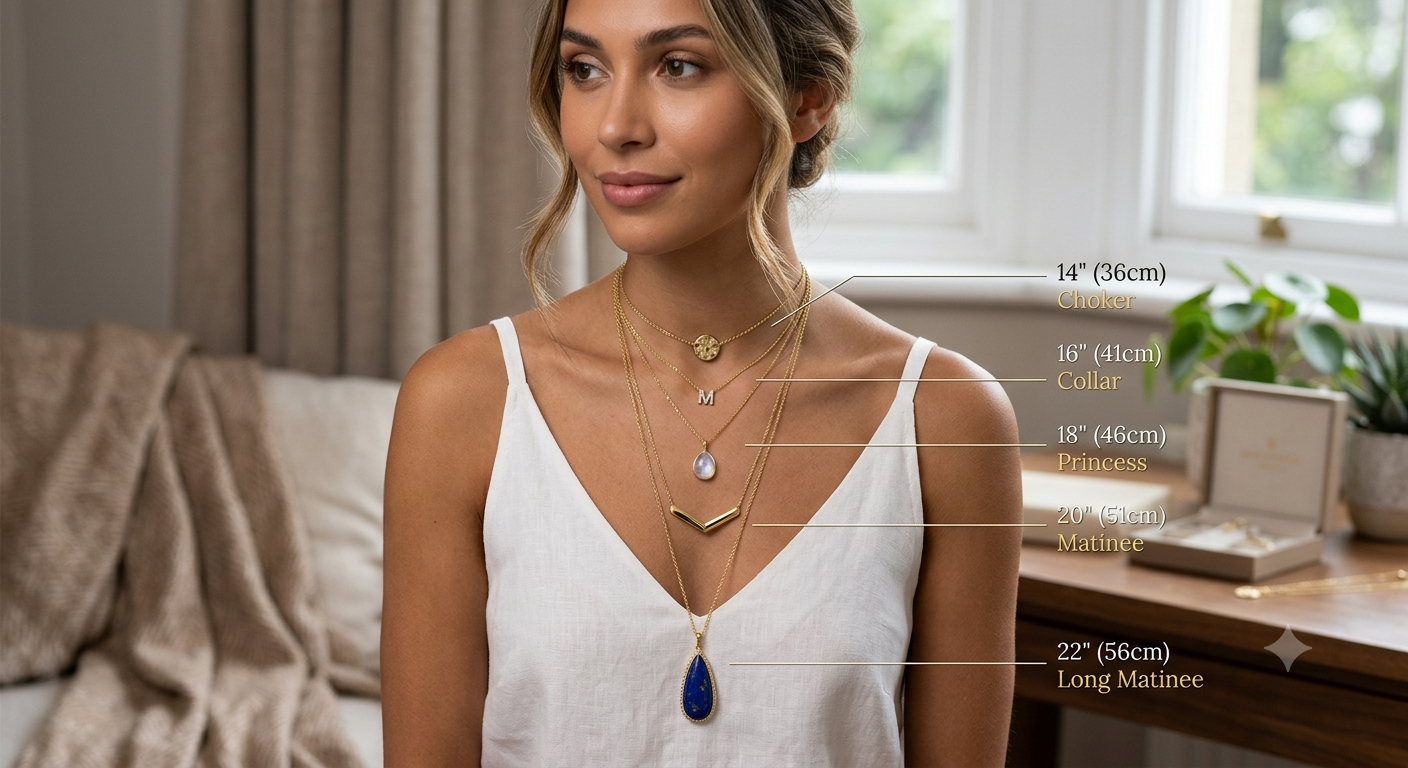
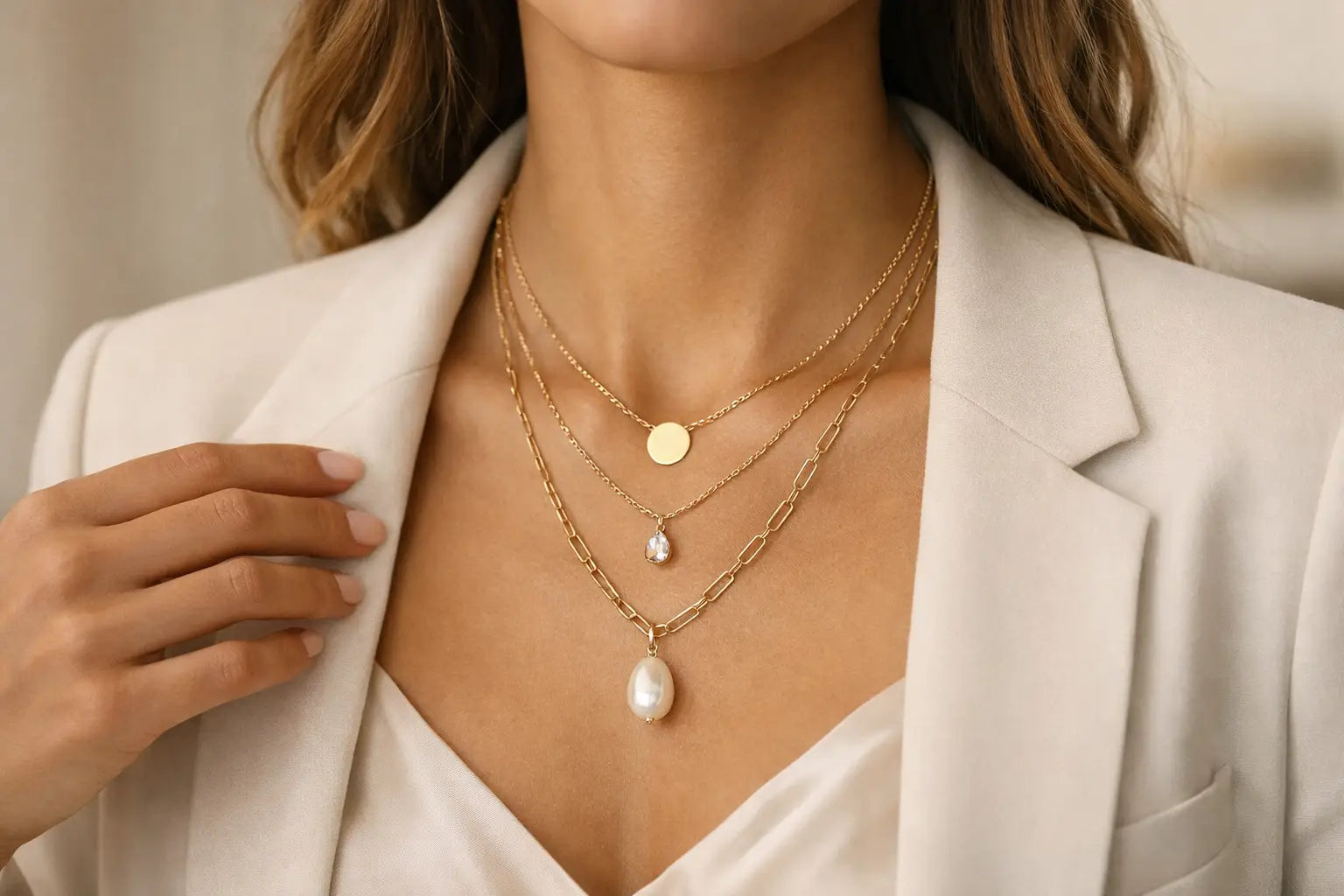
The first principle is spacing. Layers need visible separation so each necklace can be seen properly. If chains are too close in length, they can twist together and visually merge into one line. In most cases, the most flattering stack starts with a shorter piece near the collarbone, a mid-length chain that creates breathing room, and a longer necklace or pendant that draws the eye down.
This does not mean every layer must be dramatically different. A subtle graduation often looks more elegant than a sharp jump from very short to very long. The right spacing depends on your neckline, your frame and the scale of the pieces themselves. A delicate fine chain may sit beautifully in closer company, while a bolder pendant needs more room to stand apart.
Balance also comes from visual weight. If every necklace features a prominent charm or heavy link, the overall look can feel busy. Usually, one focal piece is enough. Let the other layers support it through texture, shine or length rather than competing for attention.
Start with a base layer
A strong layered look often begins with the simplest necklace in the stack. Think of this as the anchor - the piece that sits closest to the neck and sets the tone for everything that follows. A fine trace chain, a close-fitting diamond line, a polished bar or a subtle station necklace all work beautifully as a base.
This first layer should feel comfortable and easy. If it sits too tightly, the stack can appear restricted. If it drops too low, it leaves no space for the next necklace to create shape. For many necklines, the ideal base sits neatly at the collarbone, framing the face and allowing the following layers to cascade naturally.
A plain base layer is especially useful if you want to include a pendant elsewhere in the stack. It creates a clean opening line and keeps the eye from settling too heavily on one point too soon.
Add contrast through chain style
The most polished necklace layers rarely rely on length alone. Contrast in chain design gives the arrangement more texture and sophistication. A fine cable chain paired with a slightly weightier curb, figaro or bead detail can feel far more luxurious than three near-identical pieces worn together.
That said, contrast should still feel related. If one necklace is highly intricate and another is distinctly modern and architectural, the pairing can work - but only if there is some shared element, whether that is metal colour, finish or overall delicacy. When every chain tells a different story, the result loses cohesion.
Fine jewellery layering is often most successful when it combines two qualities at once: consistency and variation. Keep one thread running through the look, then introduce enough difference to make each piece visible.
Choosing pendants without overcrowding
Pendants bring character to layered necklaces, but they need editing. If you love symbolic pieces, lockets, initials or diamonds, it can be tempting to wear several statement pendants together. Sometimes this works, particularly when the pendants are very fine and placed at distinct lengths. More often, one principal pendant supported by one or two simpler chains creates a more elevated effect.
Scale matters here. A larger pendant deserves either the longest line in the stack or the central position if you want it to become the obvious focal point. Smaller motifs can sit closer to the neck and read as delicate accents. If two pendants are similar in size and length, they may knock against each other and feel unsettled.
There is also the question of sentiment versus styling. Many treasured necklaces carry emotional meaning, and you do not always want to remove one for the sake of perfect symmetry. In those cases, lean into restraint elsewhere. Let the sentimental piece lead, then keep the remaining layers quieter.
How to style layered necklaces with different necklines
Necklines shape jewellery more than most people realise. A layered stack that looks elegant with an open shirt can feel compressed against a crew neck or slightly adrift above a deep V-neck. Styling begins with the space your clothing creates.
With a V-neck, mimic the line of the garment. Layers that descend gradually and finish with a pendant often look especially flattering because they echo the shape without looking too literal. Scoop necks and open collars are more forgiving, allowing for a softer spread of lengths and textures.
High necks need a different approach. Rather than starting with a very short layer that disappears into the fabric line, move the stack slightly lower so the jewellery sits clearly against the garment. This gives each piece room to be noticed. Strapless and square necklines often suit a shorter, more sculpted stack that frames the collarbone and shoulders with precision.
If your outfit already has visual complexity - ruffles, embellishment, bold prints - simpler layers usually feel more polished. When the clothing is clean and understated, necklaces can do more of the expressive work.
Mixing metals with intention
Mixed-metal styling has become far more refined than the old idea that metals must always match. Yellow gold, white gold, sterling silver and platinum can sit together beautifully when the mix feels deliberate. The easiest way to make it look considered is to repeat each tone at least once, so no single metal appears accidental.
A yellow gold chain paired with a white metal pendant can feel elegant if another white element appears elsewhere in the stack. Equally, one diamond-set piece often helps bridge metals because its brilliance softens the distinction between warm and cool tones.
If you are new to mixed-metal layering, keep the silhouettes simple. Let the contrast come from colour rather than from overly varied chain shapes, oversized pendants and multiple decorative details all at once.
Day-to-evening layering
One of the strengths of layered necklaces is versatility. A delicate stack can feel perfectly placed with knitwear, shirting or a simple tee during the day, then become more luminous for evening with only a small adjustment. Often, that adjustment is not adding more jewellery, but exchanging one understated chain for a pendant or diamond detail with greater presence.
For daytime, lighter layers tend to feel effortless. You want enough interest to elevate the look, but not so much that it distracts from tailoring or everyday dressing. Evening allows for more contrast, a touch more brilliance and a stronger focal piece.
The trade-off is comfort and practicality. If you wear your necklaces all day, an intricate five-piece stack may ask for more attention than you want to give it. A thoughtfully edited combination of two or three fine necklaces often feels more luxurious precisely because it remains easy to wear.
When to keep it minimal
Not every outfit needs a full layered composition. There are moments when a single exquisite necklace or two carefully chosen chains achieve more than an elaborate stack. This is particularly true with formalwear, heavily embellished fabrics or earrings that already command attention.
Layering should enhance your style, not become a formula. Some of the most elegant jewellery wardrobes are built around versatility - pieces that can be worn alone, paired simply or styled into a fuller look when the occasion calls for it. That flexibility is where fine jewellery proves its worth.
If you are building a collection, start with necklaces that offer distinct roles: one close-fitting chain, one mid-length piece with subtle detail, and one longer necklace or pendant. From there, layering becomes less about trend and more about composition. Harper Kendall approaches fine jewellery in exactly this spirit - crafted to be personal, enduring and styled in ways that feel uniquely yours.
A layered necklace look is at its best when it appears effortless, even though every element has been chosen with care. Trust proportion, leave space for each piece to breathe, and let your jewellery say something precise about your style rather than everything at once.