


Diamond Ring Buying Guide for Modern Buyers
The right diamond ring should feel unmistakable the moment it lands on the hand - balanced in proportion, beautiful in light, and entirely in tune with the person wearing it. That is the real purpose of a diamond ring buying guide: not simply to explain carats and settings, but to help you choose a piece with presence, longevity and personal meaning.
A diamond ring is rarely just an accessory. It may mark an engagement, an anniversary, a milestone birthday or a private moment of self-celebration. Whatever the occasion, the best choice sits at the intersection of craftsmanship and individuality. The details matter, but so does the overall feeling.
What matters most in a diamond ring buying guide
Many first-time buyers start with carat weight, assuming size tells the whole story. In practice, the beauty of a diamond ring is shaped by proportion, cut, setting and the way the design suits the wearer’s lifestyle. A larger stone with a poor cut can look dull, while a slightly smaller but expertly cut diamond can appear brighter and more refined.
This is why it helps to think in layers. Begin with the wearer. Do they favour understated elegance or statement styling? Are their existing pieces minimal and modern, or more classic and decorative? A ring worn every day should feel like a natural extension of personal style, not a compromise made for convention.
Then consider wearability. A very high setting can create drama, but it may not suit someone with a hands-on routine. A delicate band can look exquisitely refined, yet a slightly broader shank may offer better balance and durability for long-term daily wear. Fine jewellery is about beauty, certainly, but also about intelligent design.
The diamond itself: cut, carat, colour and clarity
Cut is where brilliance begins
If one feature deserves your closest attention, it is cut. Cut determines how a diamond handles light, which is what gives it life. A well-cut stone appears lively and bright, with crisp sparkle and better visual presence. Even before you notice the exact shape or size, you notice the light.
Round brilliant diamonds remain the classic choice for maximum sparkle, but they are not the only option. Oval, pear, emerald, cushion and radiant cuts all create a different mood. An emerald cut, for example, offers quiet sophistication and hall-of-mirrors elegance rather than glittering intensity. An oval can feel elongating and contemporary, while a cushion cut often reads as romantic and softly vintage.
Carat is size, not beauty
Carat refers to weight, not just visible dimensions. Two diamonds of the same carat can look different in size depending on their cut and shape. That is why a carat figure should never be viewed in isolation.
For some buyers, a larger centre stone is the priority. For others, balance is more compelling than scale. A beautifully proportioned ring with a modest carat weight can look far more luxurious than an oversized design lacking harmony. The most elegant rings rarely feel as though one element has been chosen at the expense of all others.
Colour and clarity depend on priorities
Colour measures how white a diamond appears, while clarity refers to internal characteristics and surface marks. Both matter, but neither should be treated as a race for perfection. What matters is choosing a standard that looks exceptional to the eye and aligns with the ring’s design.
For instance, some settings and shapes reveal colour more readily than others. Likewise, step-cut diamonds such as emerald cuts tend to show inclusions more easily than brilliant cuts, so clarity can take on greater importance there. In a brilliant-cut diamond, slight inclusions may be far less noticeable once the stone is set and sparkling.
This is where nuance matters. The goal is not necessarily the highest possible grade in every category, but the most beautiful combination overall.
Choosing the right setting for style and security
The setting influences both the ring’s character and how the diamond is experienced. A solitaire remains the purest expression of the stone itself. It is timeless, elegant and endlessly versatile. If the wearer values clean design and enduring style, a solitaire is difficult to surpass.
A halo setting creates extra presence by surrounding the centre diamond with smaller stones. It can enhance sparkle and make the overall ring appear more substantial. The effect is glamorous, though it may feel less restrained than a classic solitaire.
Three-stone rings carry a beautiful sense of symbolism and often offer a more distinctive profile on the hand. Pavé bands bring added brilliance and a more decorative finish, while bezel settings deliver a sleek, contemporary edge with excellent protection for the stone.
Each setting comes with trade-offs. Prongs allow more light to reach the diamond, but they require periodic checking. Bezel settings are secure and modern, though they can slightly soften the airy look some buyers want. There is no universally correct answer - only the right fit for the wearer and the occasion.
Metal choice shapes the entire look
Metal colour changes the personality of a diamond ring more than many buyers expect. Platinum has a naturally white tone and a substantial feel, making it a strong choice for those who appreciate quiet luxury and durability. White gold offers a similarly refined look with a slightly different finish and feel.
Yellow gold brings warmth and a classic richness that suits both vintage-inspired and fashion-led designs. It can make a ring feel immediately distinctive, especially on warmer skin tones. Rose gold is softer and more romantic, with a contemporary femininity that still feels timeless when handled well.
Think about the jewellery already worn most often. A diamond ring should not exist in isolation. It should sit comfortably beside a watch, bracelet or wedding band, and feel cohesive within a wider jewellery wardrobe.
Proportion, finger shape and personal style
A ring does not need to follow trends to feel current. It simply needs the right proportions for the hand and the right language for the wearer’s style. Elongated cuts such as oval, pear and emerald can create a graceful line on the finger. Round and cushion cuts tend to feel balanced and classic. Wider bands make a stronger statement, while finer bands can lend delicacy and draw attention to the centre stone.
This is often where trying on different styles, or working with a jewellery concierge or bespoke service, becomes especially valuable. Some designs look perfect on paper but entirely different once worn. A ring should feel considered from every angle - on the hand, in motion, and in everyday light.
Practical details buyers should not overlook
A beautiful ring should also be built for real life. Confirm the correct ring size as early as possible, particularly if the purchase marks a surprise occasion. Resizing is possible in many cases, but not every setting or band design allows for significant adjustment without affecting the ring’s structure.
Pay attention to hallmarking and metal information, as these offer reassurance about precious metal quality. Ask how the ring should be cared for and how often settings should be checked. Diamonds are durable, but fine jewellery still deserves proper maintenance.
If you are buying for a proposal or major milestone, presentation matters too. Luxury is not only about the object itself, but the confidence surrounding the purchase - thoughtful guidance, craftsmanship transparency and the sense that the piece has been chosen with care.
When bespoke is the right decision
A ready-to-wear ring can be exactly right, particularly when the design has strong proportions and timeless appeal. But there are moments when bespoke makes more sense. Perhaps you want to combine design references, create a ring around a particular diamond shape, or craft something that feels entirely personal.
For buyers who value individuality, bespoke offers a more intimate route to the final piece. It allows you to refine details such as band width, setting height, metal choice and overall silhouette. The result is often not louder, but more precise - a ring that feels deeply aligned with the wearer rather than broadly appealing to everyone.
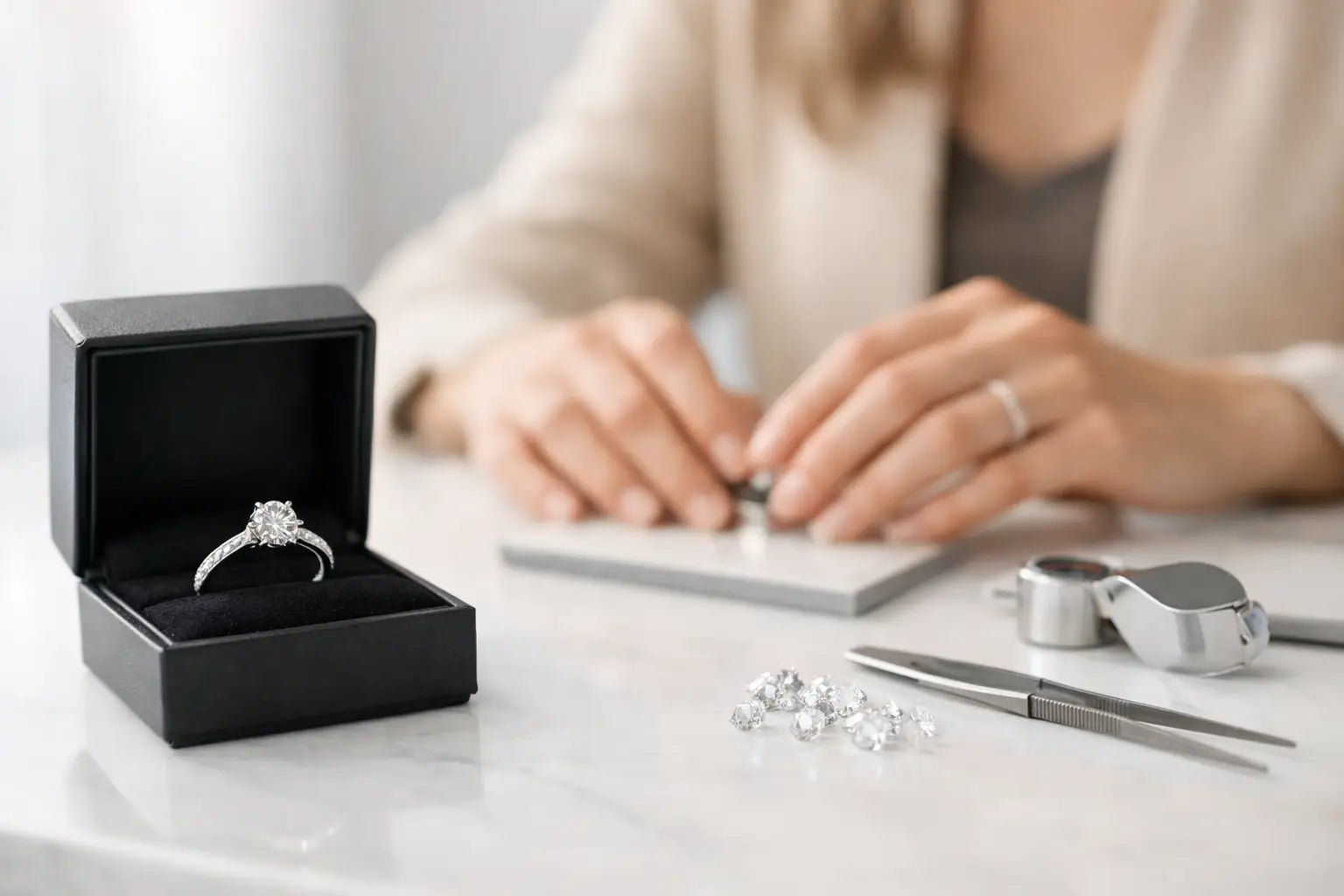
That is part of the appeal of a fine jewellery house such as Harper Kendall, where design-led collections and concierge support can sit side by side. Some buyers know exactly what they want. Others need help translating a feeling into a finished ring. Both approaches deserve the same level of craftsmanship.
A diamond ring buying guide should lead to confidence
The best ring is not defined by a single specification. It is the one that looks beautiful in its own right, suits the wearer effortlessly and still feels right years from now. When cut, setting, metal and proportion are chosen with care, a diamond ring becomes more than a purchase. It becomes part of someone’s visual identity.
Choose slowly. Look closely. And trust the designs that feel both elegant and unmistakably personal.