Article: Engagement Ring Metals Guide: What to Choose
Engagement Ring Metals Guide: What to Choose
A beautifully cut diamond may catch the eye first, but the metal is what gives an engagement ring its character. This engagement ring metals guide is designed for anyone choosing a ring that should feel as considered in its craftsmanship as it does personal in its style. The right metal shapes everything from colour and brilliance to comfort, maintenance and how the ring will wear over the years.
For some, the choice is immediate. Yellow gold feels rich and timeless, platinum feels quietly luxurious, white gold looks crisp and modern. For others, the decision is more nuanced, especially when balancing lifestyle, skin tone, design preference and longevity. That is where a little clarity matters.
Why metal matters more than most people expect
The centre stone may be the focal point, yet the metal creates the frame that makes the whole design feel refined, contemporary, vintage-inspired or unmistakably individual. A warm metal can soften the look of a brilliant white diamond. A cooler metal can sharpen it. Even delicate details such as claws, shoulders and settings read differently depending on the metal chosen.
There is also the practical side. Engagement rings are worn every day, so the metal needs to complement real life as much as personal taste. Some metals develop a soft patina over time, some require occasional replating to maintain their finish, and some are naturally denser or more resistant to wear. None of that makes one option universally better than another. It simply means the best choice depends on what kind of ring you want to wear for years, not just what looks right in the box.
Engagement ring metals guide: the main options
Platinum
Platinum remains one of the most coveted choices for engagement rings, and with good reason. It has a naturally white tone, substantial feel and enduring sense of rarity. In design terms, it lends a ring a clean, polished elegance that suits both classic solitaires and more intricate settings.
Because platinum is dense and durable, it is especially well suited to rings intended for constant wear. Rather than wearing away quickly, it tends to displace over time, developing a soft patina that many people find appealing. If you prefer a brighter finish, a professional polish can restore its original lustre.
Platinum is often chosen by those who want a metal that feels luxurious in a discreet way. It does not rely on plating to maintain its white appearance, which appeals to buyers looking for low-fuss beauty. The trade-off is weight. Some love the substantial feel on the hand, while others prefer something lighter.
18ct gold
18ct gold offers a beautiful balance of richness and refinement. Its higher gold content gives it a more luxurious depth of colour than lower-carat options, making it a particularly elegant choice for an engagement ring. It is available in yellow, white and rose gold, each bringing a different design mood.
Yellow 18ct gold has an unmistakably timeless appeal. It flatters vintage-inspired designs, softer diamond cuts and anyone drawn to jewellery with warmth and heritage. It also works beautifully as part of a curated jewellery wardrobe, especially if you already wear yellow gold daily.
White 18ct gold has a cooler, more contemporary look. It is often finished with rhodium plating to enhance its bright white surface, giving it a crisp appearance that complements diamonds beautifully. Over time, this plating may need refreshing, particularly on a ring worn every day. That maintenance is quite normal, but it is worth considering if you want a metal that stays naturally white without periodic replating.
Rose 18ct gold feels romantic, modern and slightly unexpected without losing its fine jewellery appeal. Its blush tone can be especially flattering against many skin tones and offers a softer contrast with diamonds. For those seeking individuality with a classic foundation, rose gold often strikes exactly the right note.
9ct gold
9ct gold is a practical fine jewellery choice that still offers the beauty of precious metal. Because it contains a lower proportion of pure gold than 18ct, it can be harder wearing in day-to-day use, which may appeal to those with a more hands-on lifestyle.
In aesthetic terms, 9ct gold is available in the same family of tones - yellow, white and rose - though the colour can appear a little less saturated than 18ct. That is not necessarily a drawback. For some designs, a lighter, subtler finish feels exactly right.
If you are choosing an engagement ring with an eye on everyday resilience and a polished look, 9ct gold can be a smart option. The decision between 9ct and 18ct often comes down to priorities: richer colour and higher gold content, or a more practical balance for regular wear.
Sterling silver
Sterling silver has a bright, elegant appearance, but it is less commonly chosen for engagement rings intended as lifelong pieces. It is softer than platinum and gold, and it is more prone to scratching and tarnishing over time.
That said, silver can suit fashion-led rings, occasional-wear pieces or styles chosen for their aesthetic rather than heirloom longevity. For an engagement ring expected to stand up to daily wear for years, most buyers gravitate towards platinum or gold instead. Silver remains beautiful, but this is one category where practicality matters.
How colour changes the entire ring
Metal colour does more than reflect personal preference. It influences how the diamond appears, how the ring sits alongside other jewellery and whether the design feels understated or expressive.
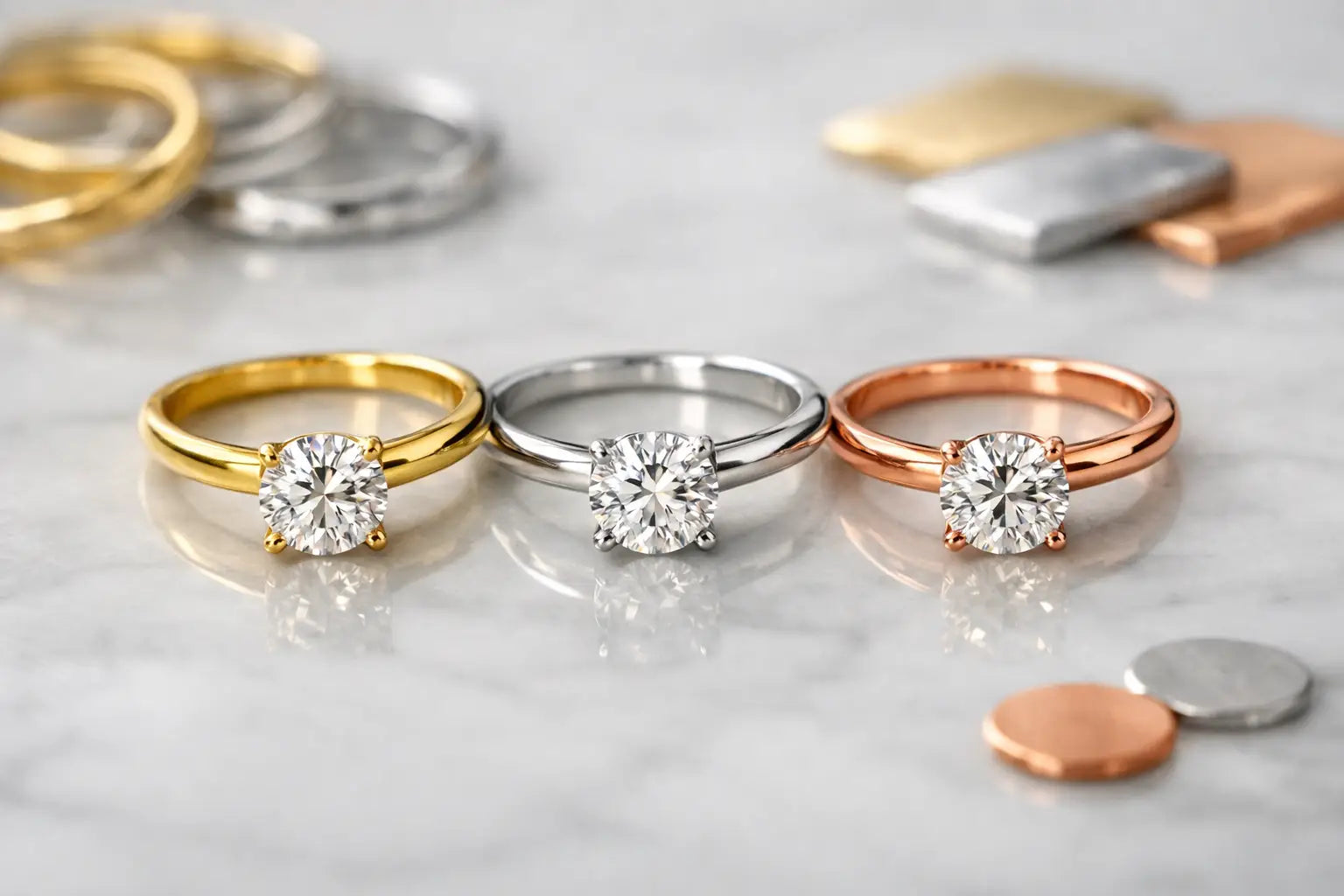
White metals such as platinum and white gold create a crisp, luminous backdrop. They tend to emphasise the whiteness and brilliance of a diamond, which is why they remain such a popular choice for solitaires and halo designs.
Yellow gold introduces warmth and depth. It can make a ring feel more classic, more fashion-led or more individual depending on the setting. It also pairs beautifully with antique-inspired details and can be particularly striking with elongated diamond shapes.
Rose gold offers softness. It feels contemporary but not stark, romantic without being overly ornate. If you want a ring with a slightly more distinctive point of view, rose gold is often the quiet standout.
Lifestyle, wear and maintenance
The most elegant engagement ring is the one that still feels right after months and years of daily wear. If you work with your hands, exercise regularly with jewellery on, or prefer not to think much about maintenance, durability should carry real weight in your decision.
Platinum suits those who want strength and natural whiteness. White gold suits those who love a bright white finish and do not mind occasional upkeep. Yellow and rose gold can be wonderfully forgiving in day-to-day wear, with surface marks often blending more softly into their warmer tones.
Fit and feel matter too. Some people adore the heft of platinum, while others find gold more comfortable for constant wear. If you already wear jewellery every day, think about what you instinctively reach for. Your engagement ring should feel like an elevated extension of your style, not something you are always adjusting to.
Matching the metal to the design
Certain designs naturally come alive in particular metals. A minimal solitaire in platinum or white gold feels sharp and architectural. A vintage-inspired setting with milgrain or intricate detailing often looks especially beautiful in yellow or rose gold. A modern trilogy ring can work across all tones, but the mood shifts with each one.
This is where individuality becomes the real luxury. The same diamond can feel entirely different depending on the metal around it. For those exploring bespoke options, the metal choice becomes part of the design language itself, not simply a finishing detail.
Choosing with confidence
The best engagement ring metals guide cannot give one answer for everyone, because the right choice is personal. Start with what you wear most. Think about whether you are drawn to warmth or brightness, subtlety or contrast. Then consider how much maintenance you are comfortable with and how substantial you want the ring to feel on the hand.
If longevity, rarity and a naturally white finish matter most, platinum is a compelling choice. If rich colour and timeless versatility are what you want, 18ct gold is beautifully poised. If practicality leads your decision, 9ct gold may suit you perfectly. And if your focus is fashion rather than lifelong daily wear, sterling silver still has its place.
A ring this meaningful should never feel generic. Whether you choose a polished platinum solitaire, a warm yellow gold setting or a rose gold design with a softer signature, the metal should feel as personal as the promise behind it. The finest choice is the one that looks unmistakably like you every time your hand catches the light.