


How to Measure Ring Size at Home
A beautiful ring should feel as considered as it looks. If you are wondering how to measure ring size before choosing a new piece, the goal is not simply to get a number - it is to find a fit that feels secure, elegant and effortless every day.
Ring sizing sounds straightforward, yet a surprisingly small difference can change how a ring wears. Too tight, and it can feel restrictive by evening. Too loose, and it may spin, catch or slip off when your hands are cold. For fine jewellery, especially pieces designed to be worn for years, precision matters.
How to measure ring size accurately
The most reliable way to measure ring size is with a proper ring sizer or by having your finger measured professionally. That said, if you are buying from home or planning a gift, there are dependable ways to get close, provided you take your time and avoid a few common mistakes.
Your ring size is influenced by more than finger circumference alone. Band width, the hand you wear it on, temperature and even the time of day all affect fit. Wider bands tend to feel tighter than slim, delicate styles. Fingers can swell slightly in warm weather or after exercise. Many people also find that the same finger is not identical in size on both hands.
This is why measuring once, quickly, is rarely enough for a confident result. A more refined approach is to measure carefully, compare methods where possible, and think about the style of ring you plan to wear.
Use a ring you already wear well
If you already own a ring that fits the intended finger comfortably, this can be one of the easiest starting points. The key is choosing a ring that sits exactly where the new one will be worn. A ring for the index finger will not help much if you are shopping for the ring finger, and your left and right hands may differ slightly.
Place the ring on a ruler and measure the internal diameter in millimetres, straight across the centre. You need the inside edge to inside edge measurement, not the outer width of the band. Once you have the internal diameter, you can compare it against a standard UK ring size chart.
This method is useful for everyday bands, signet rings and stackable styles, though accuracy depends on measuring the true inside diameter rather than estimating by eye. If the ring is noticeably oval from wear or has been resized before, use extra caution.
Measure your finger with paper or string
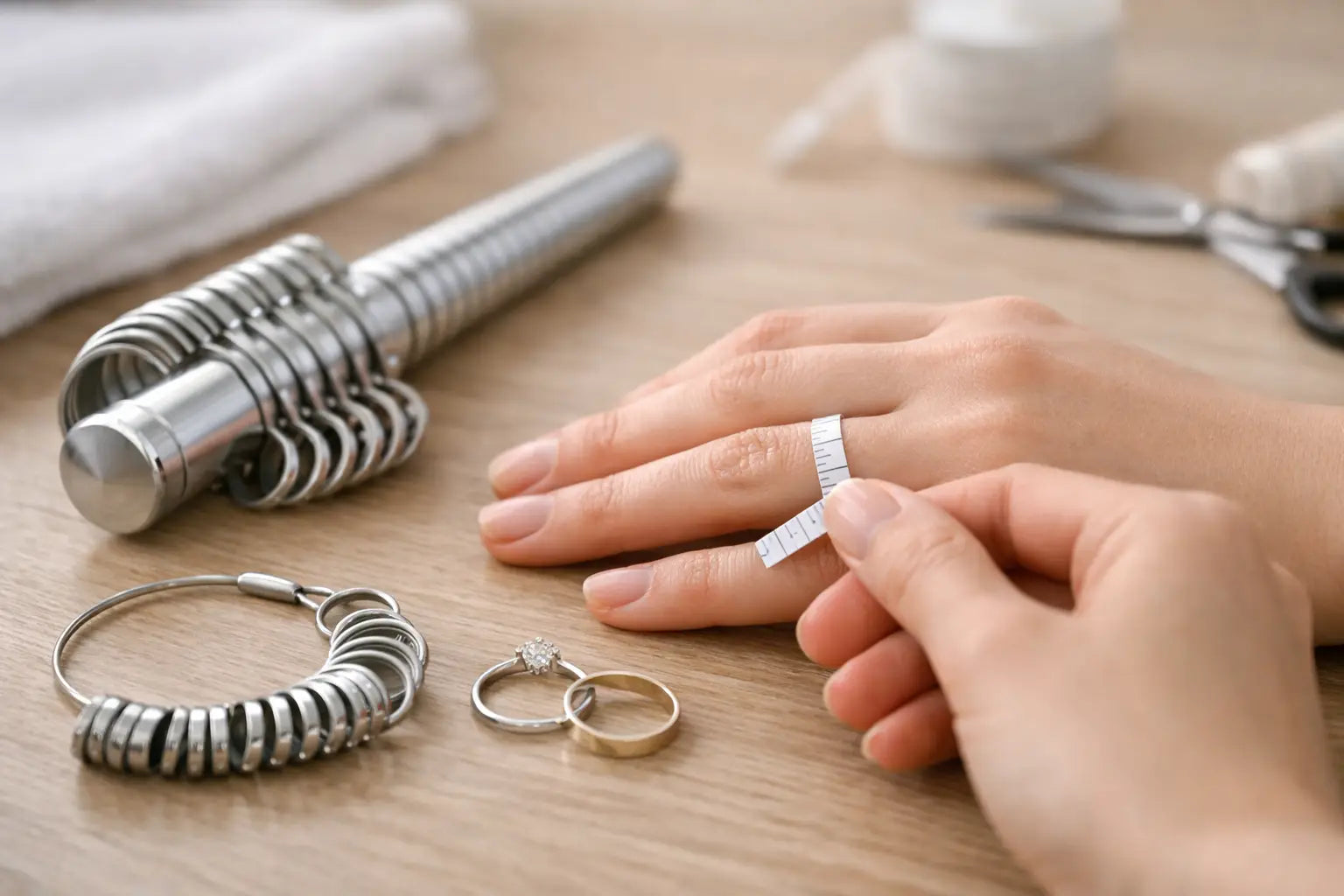
If you do not have a well-fitting ring to reference, a thin strip of paper or a non-stretch piece of string can work. Wrap it around the base of the intended finger so it feels snug but not tight. Mark the point where the ends meet, then lay it flat and measure the length in millimetres.
That measurement gives you the finger circumference, which you can then compare to a UK sizing chart. Keep the paper or string level while measuring. If it twists, pulls too tightly or sits too loosely, the result will be off.
This method is popular because it is simple, but it is also where many sizing mistakes happen. String can compress into the skin or stretch slightly. Paper can buckle. If you use this approach, repeat it three or four times and take an average rather than relying on a single attempt.
Try a printable ring sizer carefully
A printable ring sizer can be helpful if it is printed at the correct scale. Before using one, check the test measurement on the page with a ruler. If your printer has adjusted the document size, the final result may be inaccurate.
Most printable sizers offer two options: placing an existing ring over printed circles, or cutting out a measuring strip to wrap around your finger. Both can work, but only when printed precisely. Even a slight scaling issue can affect fit, especially with finer size increments.
What affects ring fit
Knowing how to measure ring size is only part of the process. Choosing the right fit also depends on how the ring is designed and how you plan to wear it.
Band width changes the feel
A slim solitaire or fine stacking ring usually feels lighter and easier on the finger than a broad cigar band or substantial wedding ring. Wider bands cover more skin, so they often feel tighter even if the technical size is the same.
If you are choosing a wider style, many people prefer to go up slightly for comfort. That does not mean every broad ring should be sized up automatically, but it is worth factoring in when you measure.
Temperature and timing matter
Fingers are rarely the same size all day. They can be smaller first thing in the morning and larger later on, particularly in warmer weather. Measuring when your hands are very cold or directly after exercise can produce a misleading result.
For the best reading, measure at room temperature, ideally in the afternoon or early evening when your hands are at a more natural size. If you are between sizes, this can be especially useful.
Knuckles can complicate sizing
Some fingers are slimmer at the base but have more prominent knuckles. In that case, a ring must slide over the knuckle without becoming too loose once in place. The ideal fit will offer a little resistance going on and off, while still sitting securely at the base of the finger.
This is one of those moments where sizing is not purely mathematical. It depends on the shape of your hand as much as the measurement itself.
How to measure ring size for a surprise gift
Buying a ring as a surprise is romantic in theory and slightly strategic in practice. If the wearer already owns rings, discreetly borrow one that is worn on the correct finger and measure its internal diameter. That usually gives a better result than trying to guess based on appearance alone.
If that is not possible, a trusted friend or family member may know their size, especially for milestone jewellery such as engagement rings or signet rings. Another option is to compare the ring to a printed sizing guide while they are not wearing it, though accuracy still matters.
Estimating from height, hand size or clothing size is rarely reliable. Jewellery should feel personal, and a considered fit is part of that experience.
Common mistakes when measuring at home
The first is measuring too tightly. A ring should not leave deep pressure marks or feel difficult to remove every evening. The second is ignoring the knuckle, which often leads to a ring that fits in theory but not in wear.
Another frequent issue is using the wrong finger as a reference. Even on the same hand, your middle and ring fingers will not necessarily share the same size. Finally, many people measure once and stop there. Ring sizing is far more dependable when checked more than once, at different times of day.
When to choose a professional fitting
For engagement rings, wedding bands, diamond-set designs or bespoke pieces, professional sizing is always the most reassuring option. The more valuable or personal the ring, the more worthwhile expert guidance becomes. A precise fit protects comfort, wearability and confidence from the start.
It is particularly advisable if you are ordering a wide band, choosing a ring with a complex setting, or investing in a custom design. Some rings can be resized later, but not all styles are equally straightforward to alter. Eternity rings, intricate settings and certain stone-set bands may have more limitations than a plain band.
That is where a jewellery house with sizing expertise and concierge support can make the process feel far more considered. Harper Kendall approaches ring selection with the same attention to detail given to design itself, because a beautiful finish should extend to the fit.
A note on comfort and confidence
The right ring size should feel secure without demanding your attention. You should be able to wear it through the rhythm of daily life, from a morning coffee run to an evening event, without constant adjusting. It may leave a light impression on the skin, which is normal, but it should not pinch, spin excessively or feel as though it could slip away.
If you fall between sizes, the best choice often depends on the ring. For a slim stacking band, a slightly closer fit may feel elegant and stable. For a broader statement piece, a touch more room may be more comfortable. This is where personal preference matters just as much as measurement.
A ring is one of the most intimate pieces of jewellery you can wear. It is seen constantly, felt constantly, and often tied to a meaningful moment. Taking the time to measure properly is not just practical - it is part of choosing a piece that feels beautifully your own.