
Article: How to Layer Delicate Gold Necklaces Well
How to Layer Delicate Gold Necklaces Well
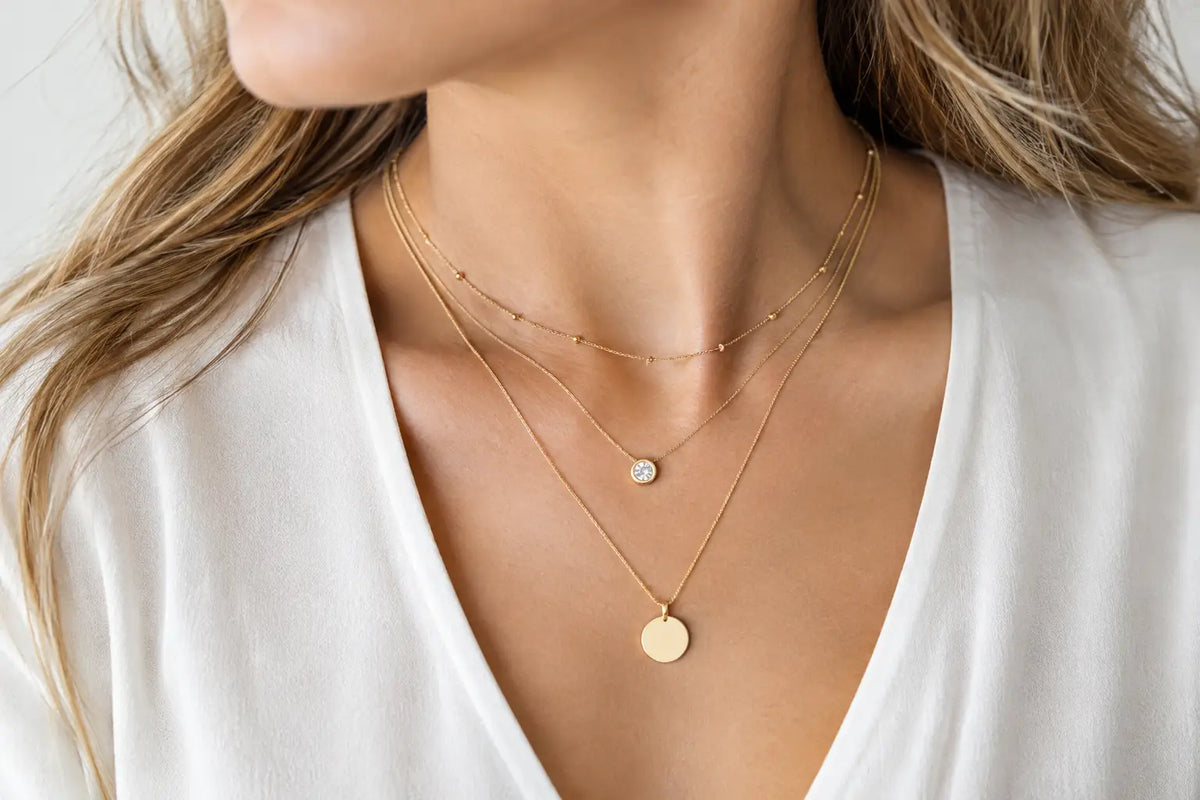
A fine gold chain resting at the collarbone, a personal pendant sitting just below it, and one quieter detail at the base of the neck can make an otherwise simple white shirt or evening neckline feel completely considered. To layer delicate gold necklaces successfully is not about wearing more jewellery. It is about proportion, spacing and choosing pieces that reflect your own story.
The most elegant necklace stacks appear effortless because each element has a purpose. A polished chain provides light, a pendant creates a focal point, and a longer line gives the arrangement movement. Whether your preference is pared-back 9ct gold or a richer 18ct finish, the same principle applies: allow every piece enough room to be seen.
Start with three considered lengths
Length is the foundation of any layered look. When necklaces sit too closely together, chains can overlap and pendants lose their definition. When they are spaced with intention, the eye travels naturally from one piece to the next.
For most necklines, begin with a short chain at approximately 40cm to frame the collarbone. Add a second necklace around 45cm, then introduce a third at 50cm or longer. These measurements are a useful starting point rather than a fixed rule. A higher neckline may call for a slightly longer first layer, while an open blouse or deep V-neckline can carry more length and drama.
Try each combination in front of a mirror while wearing the clothes you reach for most often. The right arrangement should complement the neckline rather than compete with it. A crew-neck knit may suit a fine chain and a single pendant worn just beneath the collar, while a silk shirt with a few buttons undone creates space for three distinct lengths.
Use one necklace as the focal point
Every successful stack benefits from a hero piece. This may be a diamond-set pendant, an initial, a gemstone, a meaningful symbol or a beautifully crafted medallion. Position it in the middle or lowest layer, where it can remain visible rather than disappearing beneath another chain.
If your pendant is detailed or substantial, keep the necklace above it exceptionally fine. This contrast gives the design presence without making the overall look feel busy. Conversely, a tiny pendant can be paired with a slightly more textural chain below it for added depth.
Choose a gold tone with intention
Wearing one gold tone throughout creates a composed, jewellery-box polish. Yellow gold offers enduring warmth and works particularly beautifully against crisp white cotton, black tailoring and sun-kissed skin. Rose gold lends a softer, romantic note, while white gold offers a cooler, understated brilliance.
Mixing gold colours can also be striking, but it needs a visual connection. A two-tone pendant, a favourite ring that combines metals, or a watch with mixed details can make the choice feel deliberate. Without that link, mixed metals may appear accidental rather than expressive.
Carat matters, too. 9ct gold is a refined choice for everyday wear, valued for its resilience and warm appearance. 18ct gold has a deeper, more saturated colour and a luxurious weight that suits a special pendant or investment piece. There is no requirement for every necklace in a stack to match exactly. The finish, hue and craftsmanship should simply look harmonious when worn together.
Add texture, but keep the scale delicate
Fine jewellery layering becomes more dimensional when smooth chains are balanced with subtle texture. Pair a classic trace chain with a delicate curb, belcher or bead chain, then introduce a pendant on the simplest strand. The difference in links catches the light beautifully and helps prevent the necklaces from visually merging into one line.
Avoid choosing three chains of identical thickness and length. They can look flat, particularly against a busy print or textured fabric. Equally, three highly detailed chains can overwhelm the neckline. The most refined combinations usually contain one or two quiet pieces and a single point of interest.
Diamond accents are especially effective in a delicate stack because they bring light without adding bulk. A small diamond pendant or a fine diamond station necklace can elevate everyday gold chains for dinner, celebrations or an evening event. Let it be the detail that glints rather than the piece that dominates.
Consider the weight of each piece
Delicate does not have to mean fragile in appearance, but it does demand balance. A heavier pendant should sit on a chain designed to support it, and a very fine chain should not be asked to carry an oversized charm. Beyond protecting the piece, this ensures the pendant hangs correctly and remains centred.
When layering, place the lightest chain closest to the neck and reserve a little more weight for the lower levels. This tends to keep the stack settled and prevents the upper necklace being pulled out of place. It also creates a graceful graduated effect.
Build around meaning, not just trend
The necklaces that become part of a signature look often hold a personal connection. An engraved disc may mark a birthday, an initial pendant can honour a loved one, and a diamond piece may celebrate an achievement that deserves to be remembered. Layering gives these individual pieces a way to live together rather than remaining tucked away for occasional wear.
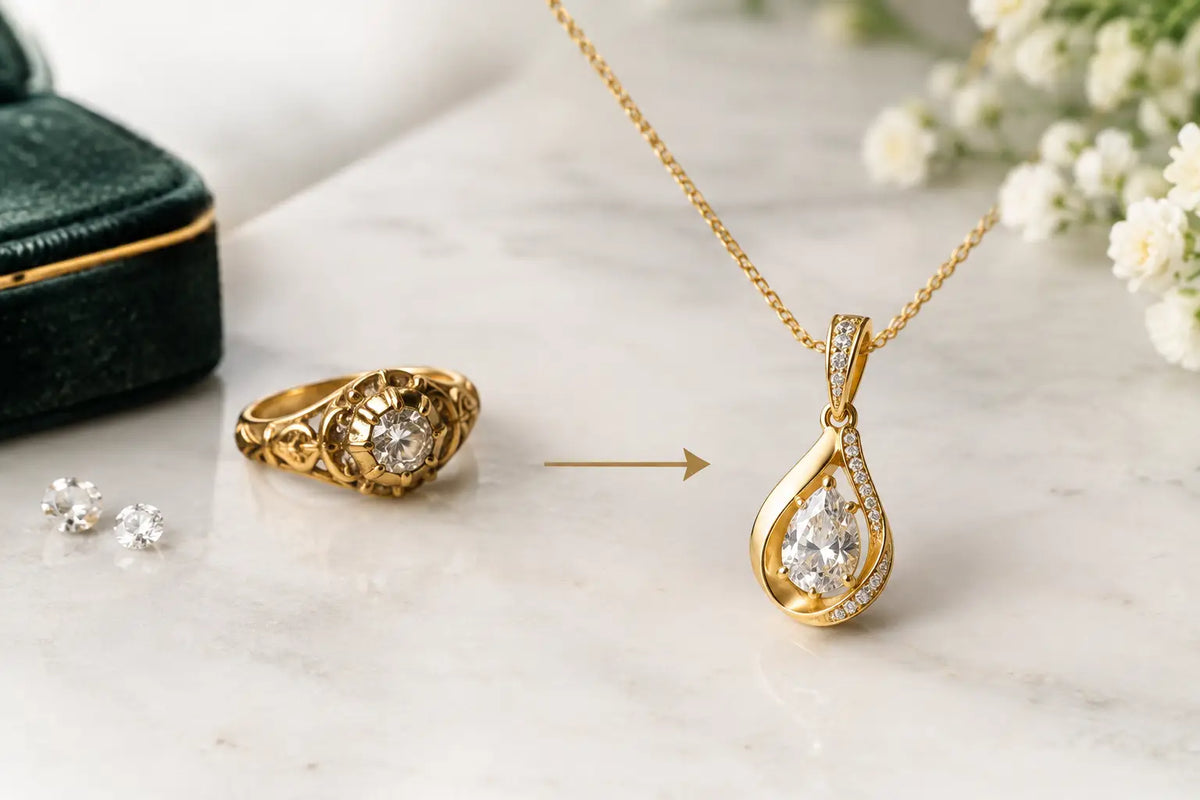
There is beauty in combining an inherited pendant with a newly chosen chain, provided the proportions work. If an older piece has a distinctive character, give it breathing room and let contemporary layers support rather than overshadow it. A bespoke adjustment or a new chain length can sometimes transform a treasured piece into something you wear every week.
At Harper Kendall, the art of beautiful design begins with individuality. A necklace stack need not follow a prescribed formula when the pieces say something genuine about the person wearing them.
How to layer delicate gold necklaces without tangling
Even a perfectly composed arrangement can become frustrating if the chains twist together throughout the day. Spacing is the first solution. Necklaces with a clear difference in length are less likely to cross, while varying chain styles can reduce the tendency for links to catch against one another.
Fit also makes a difference. Check that clasps sit comfortably at the back of the neck and that adjustable chains are secured at their intended length. If two necklaces regularly travel together, a discreet layering clasp can help keep them separated. This is particularly useful for fine chains worn beneath a coat, scarf or knitwear, where movement is unavoidable.
Store delicate gold necklaces individually whenever possible. Fasten each clasp before placing it in a soft-lined compartment or pouch, rather than dropping several chains together into one space. Taking this small amount of care preserves both the finish and the pleasure of wearing them.
Adapt your layers to the occasion
A daily stack may be as simple as a fine collarbone chain, a small pendant and one slightly longer gold chain. It brings polish to denim, knitwear and office tailoring without feeling overstyled. For an occasion, add a diamond element, a more sculptural pendant or a longer chain that draws attention to an open neckline.
Consider your other jewellery, too. If statement earrings are the focus, keep necklaces fine and restrained. If you are wearing several rings or a bold bangle, a two-layer necklace combination may feel more balanced than three. Fine jewellery is most compelling when it appears chosen, not accumulated.
Your hairstyle can change the effect. Hair swept up reveals the full composition and suits a slightly bolder stack. With hair worn loose, choose a pendant that sits clearly below the ends of your hair or keep the layers close and luminous at the collarbone.
Let the arrangement evolve
The best layered necklace collection is not built in one purchase. Start with a chain you will wear constantly, then add a pendant for meaning, a different link for texture, or a diamond detail when the moment feels right. This approach creates a wardrobe of fine jewellery with longevity, rather than a look tied to one season.
Some days, two necklaces will feel complete. On others, three or even four fine layers can bring exactly the right sense of occasion. Leave space for that instinct. When every chain has been chosen with care, your necklace stack becomes a quiet expression of craftsmanship, memory and personal style.