An Heirloom Remodelling Example in Gold
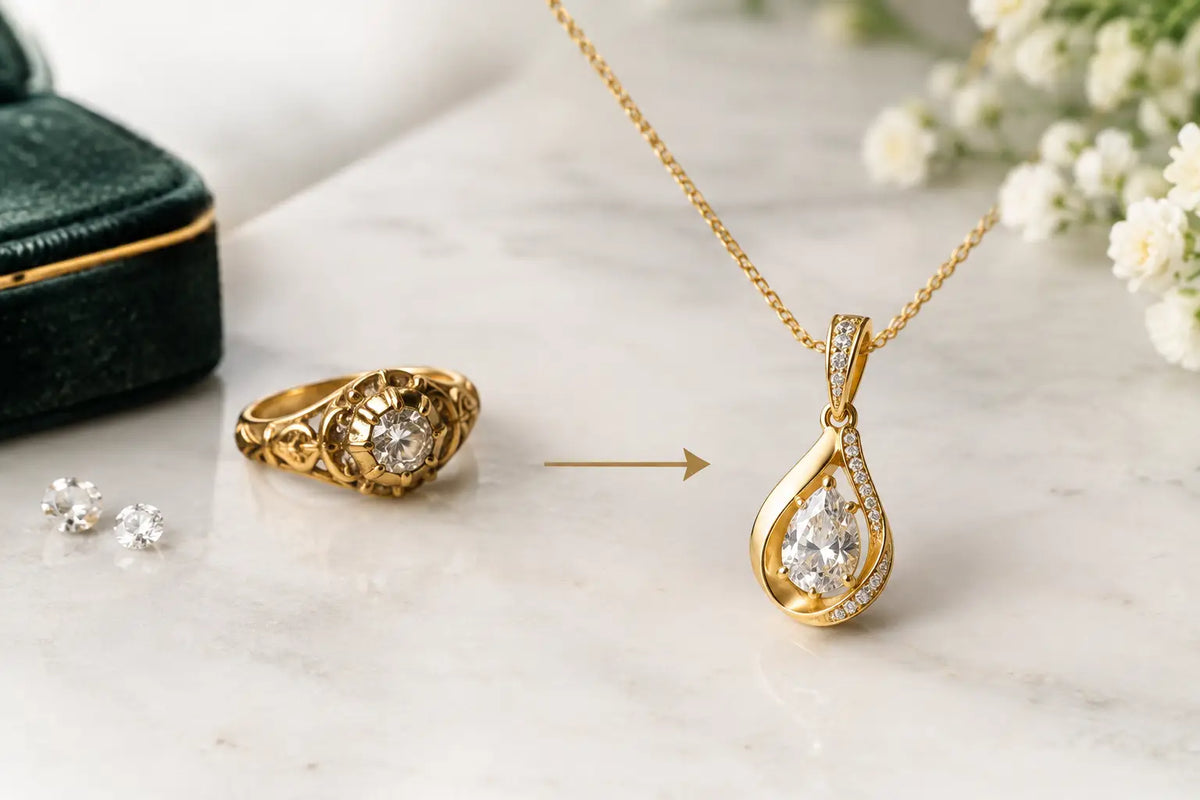
A family ring can be exquisitely made yet spend decades unworn: perhaps its setting sits too high, its yellow gold no longer reflects your style, or the finger size belongs to another generation. This heirloom remodelling example shows how a sentimental diamond ring can become a piece designed for everyday wear, without losing the history that makes it irreplaceable.
The aim is not to erase the past. It is to give precious materials and personal memories a form that belongs in the present. When handled with care, remodelling can turn a treasured but impractical jewel into the ring you reach for instinctively.
The starting point: a ring rich in history
Imagine an early twentieth-century 18ct yellow gold ring, passed from grandmother to granddaughter. Its central old-cut diamond is full of character, with softer facets and a warmer sparkle than a contemporary brilliant cut. Two small side diamonds frame the centre stone, while the delicate gallery beneath has become worn after years of love and wear.
The ring matters deeply, but its proportions do not suit its new owner. The setting catches on knitwear, the band feels too fine for daily life, and the yellow gold does not sit easily alongside the wearer’s preferred platinum and white gold jewellery. Leaving it in a box preserves its original form, but not necessarily its place in the family’s everyday story.
This is where a considered bespoke brief begins. Before any design is proposed, the piece should be assessed for its metal, gemstone security, condition and construction. A jeweller will establish which details can be retained, which are too fragile to reuse, and whether the original gold is suitable for melting and recrafting. Antique jewellery can contain unexpected solder joins or alloys, so reuse is never a promise to make before the materials have been examined.
An heirloom remodelling example, step by step
For this design, the old-cut diamond becomes the focal point of a low-profile solitaire ring in platinum. Platinum brings a clean, restrained contrast to the diamond’s romantic character and offers excellent strength around the setting. The centre stone is reset in a handcrafted bezel with a fine millegrain edge, a detail that quietly echoes the ring’s period origins while creating a more protective, practical silhouette.
The two side diamonds are not treated as afterthoughts. Rather than forcing them into a setting that feels crowded, they are set inside the shoulders of the new ring, one on either side. They reveal themselves in profile and add a private layer of discovery for the wearer. This approach retains all three stones while allowing the central diamond to breathe.
The original yellow gold is refined where possible and incorporated as a slim inner sleeve inside the platinum band. It cannot be seen from the outside, yet it remains physically present against the finger. An intimate engraving records the grandmother’s initials and a significant date, transforming provenance into part of the design rather than a detail stored in a separate jewellery box.
The result is not a replica of the original ring. It is a composed, contemporary heirloom: low-set enough for a busy day, refined enough for an evening out, and distinctive enough to feel entirely personal. Its value lies in the craftsmanship, the quality of the stones and the unbroken connection between past and present.
Why a complete redesign can be the right choice
A simple resize or repair is sometimes all an heirloom requires. If the setting is secure, the style is loved and the ring can be worn comfortably, preserving it intact may be the most meaningful decision. Remodelling is most compelling when a piece is structurally compromised, stylistically distant from its new owner, or waiting unworn because it no longer fits modern life.
A full redesign also gives greater control over proportion. Older diamonds are often cut with individuality rather than uniformity. A bespoke setting can be shaped around the precise outline, depth and character of the stone, rather than asking a pre-made mount to accommodate it. This is especially valuable for old cuts, unusual coloured gems and stones that carry visible signs of their history.
There is, however, a balance to strike. Original hallmarks, engraved messages and distinctive handwork may hold as much importance as the diamonds themselves. Where the original shank or setting has a story worth preserving, it may be preferable to create a new jewel from the stones while retaining the original ring separately as an object of family history.
Designing around sentiment, not just stones
The most successful remodelled jewellery begins with a conversation about how the piece should feel. Some clients want a bold signet-inspired ring that gives small family diamonds a new presence. Others prefer a delicate pendant, allowing a single inherited stone to sit close to the heart. A wedding band can incorporate discreet diamonds from several family rings, creating a quietly powerful union of histories.
Lifestyle matters just as much as aesthetics. Someone who works with their hands may favour a flush setting or smooth bezel. A wearer drawn to layered necklaces may find that an inherited brooch converts beautifully into a pendant. If the jewellery will be worn beside an engagement ring, the profile, metal tone and band shape should be considered together.
Metal choice changes the mood. Reusing yellow gold can honour the original piece and create a warm, classic finish. Platinum lends a cool, architectural quality and is particularly suited to diamond settings. An 18ct gold design offers richness and versatility, while 9ct gold can be a considered choice for certain everyday pieces. There is no universal answer: the right material depends on the design, the condition of any existing metal and the wearer’s collection.
Details that retain the original character
Remodelling does not need to mean starting from a blank page. A fine millegrain border, hand engraving, an old-cut diamond or a curved motif borrowed from the original gallery can carry a sense of continuity into a fresh design. Even the least visible choices can become meaningful: an inner-band inscription, a hidden gemstone, or an accent in retained gold.
Photographing the original jewel before work begins is a thoughtful part of the process. It creates a visual record to keep with the completed piece, particularly when the original mount is being transformed. If there are several family members connected to the jewel, agreeing the plan before any alteration is wise. Sentiment is shared territory, and clarity protects both the piece and the relationships around it.
What to ask before remodelling an heirloom
A trusted jewellery specialist should be able to explain the proposed work in clear, specific terms. Ask whether each gemstone can be safely removed, whether the original metal is appropriate for reuse, and how the finished design will protect the stones. It is also sensible to discuss the likely effect of any alteration on antique hallmarks and original details.
Request a design that reflects how you will genuinely wear the piece, rather than an idea that only looks beautiful in a sketch. Consider height, width, comfort, future resizing and whether the ring will sit neatly with other jewellery. Fine jewellery should feel exceptional, but it should also earn its place in your life.
At Harper Kendall, bespoke design begins with the individual story behind the materials. Whether a cherished stone is destined for a new ring, pendant or pair of earrings, thoughtful remodelling allows craftsmanship to give sentiment a confident new expression.
A family jewel need not remain frozen in the era in which it was made. With a sensitive eye, skilled hands and a design that feels true to its next wearer, it can become the piece that carries its story forward every day.